Schedule a Call
Insight

What makes a great retail ATS? A 2026 buyer’s guide for retail hiring teams

December 11th, 2025 6 minute read
Alice Dodd author
Alice Dodd
Senior Content Manager
In 2025, retail talent acquisition teams met only 49% of their hiring goals. Filling roles now takes more coordination, clearer workflows, and better support for store managers than most general-purpose ATS platforms can offer.

The system you use shapes how quickly you can hire, how much administrative work your team carries, and how consistent the experience feels for candidates and hiring managers. In retail, where volume and pace matter, those differences add up fast.

This guide breaks down what makes a great retail applicant tracking system, and how to evaluate the best ATS for retail hiring teams in 2026, so you can choose a platform that supports how you actually hire.

Why retail recruiting needs a different kind of ATS in 2026

Retail hiring brings together scale, speed, and collaboration in ways that few other industries do.

You’re hiring across stores, regions, and roles, often at volume, and store managers are closely involved at every stage. When hiring systems aren’t built for that reality, processes slow down, handoffs break, and recruiters end up filling the gaps manually.

In retail, your ATS needs to support fast movement through large applicant pools, flexible workflows across locations, and simple actions for hiring managers. Candidates also expect clear, timely communication, often on mobile, and delays quickly lead to drop-off. When those expectations aren’t met, teams lose momentum and spend more time chasing updates.

A retail-focused ATS gives you the structure and visibility to keep hiring consistent and efficient across the business. It supports the pace of retail hiring while reducing admin for recruiters and making it easier for managers and candidates to stay engaged.

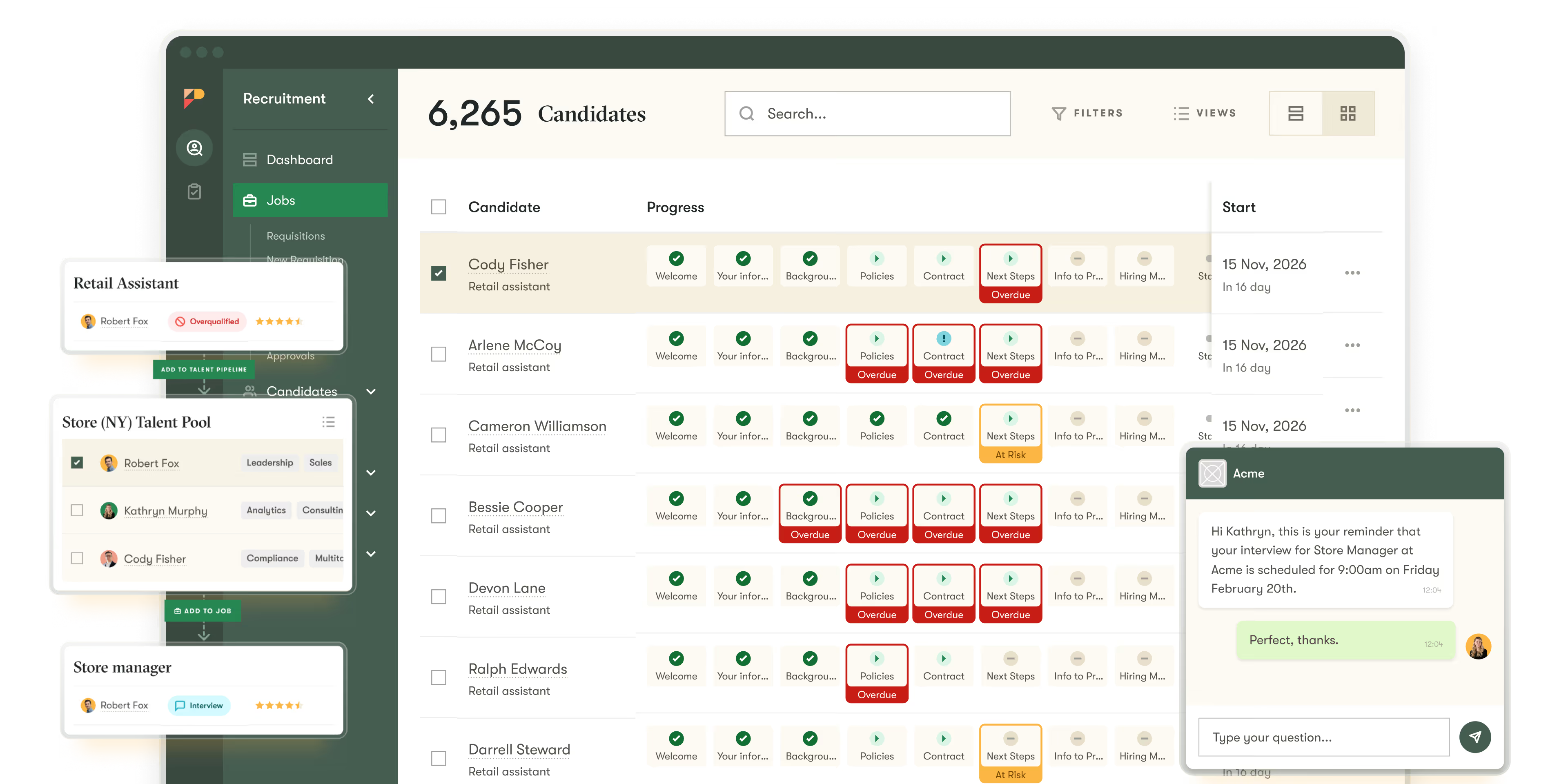
retail-ats-high-volume-hiring-pinpoint

Retail hiring challenges that define what a great ATS must solve

You’re working in an environment that keeps shifting, and every change affects how you attract, engage, and hire talent. 

The challenges below shape what you need from your retail ATS, and influence the features and workflows that will support your team in 2026 and beyond.

Seasonal hiring and high turnover cycles

Seasonal hiring means recruiting large numbers of people within short timelines, and many of those hires are new or returning staff. The holiday season comes around every year, so the challenge is the amount of coordination required, not the swings in demand. A retail ATS helps you organize previous applicants, re-engage past seasonal workers, and move quickly when hiring ramps up.

Rising labor costs and smaller TA teams

Many retail TA teams are expected to support large hiring volumes with lean internal resources. Rising labor costs increase pressure on your team to work efficiently, and repetitive manual tasks make that harder. Your retail ATS needs to reduce admin, streamline communication, and support consistent hiring across stores without adding extra work.

Increasing time-to-hire, especially for volume roles

More than 53% of retail TA leaders say their time-to-hire increased in 2025, which puts more strain on already busy teams. High-volume roles are the first to feel the impact of delays. A retail-ready ATS helps you streamline reviews and keep candidates engaged from the moment they apply.

Accelerating adoption of automation and AI

Automation is becoming essential for reducing manual work and supporting store managers who are operating under intense time pressure. When tasks like screening, communication, and scheduling run in the background, you gain more time for strategic hiring. A capable retail ATS gives you automation that feels intuitive and strengthens your workflow rather than complicating it.

Declining availability of part-time and student labor

Part-time and student labor has become less reliable in some markets, which means you’re hiring more long-term, full-time employees. That shift requires stronger screening tools and a smooth onboarding experience. A modern retail ATS supports that entire lifecycle.

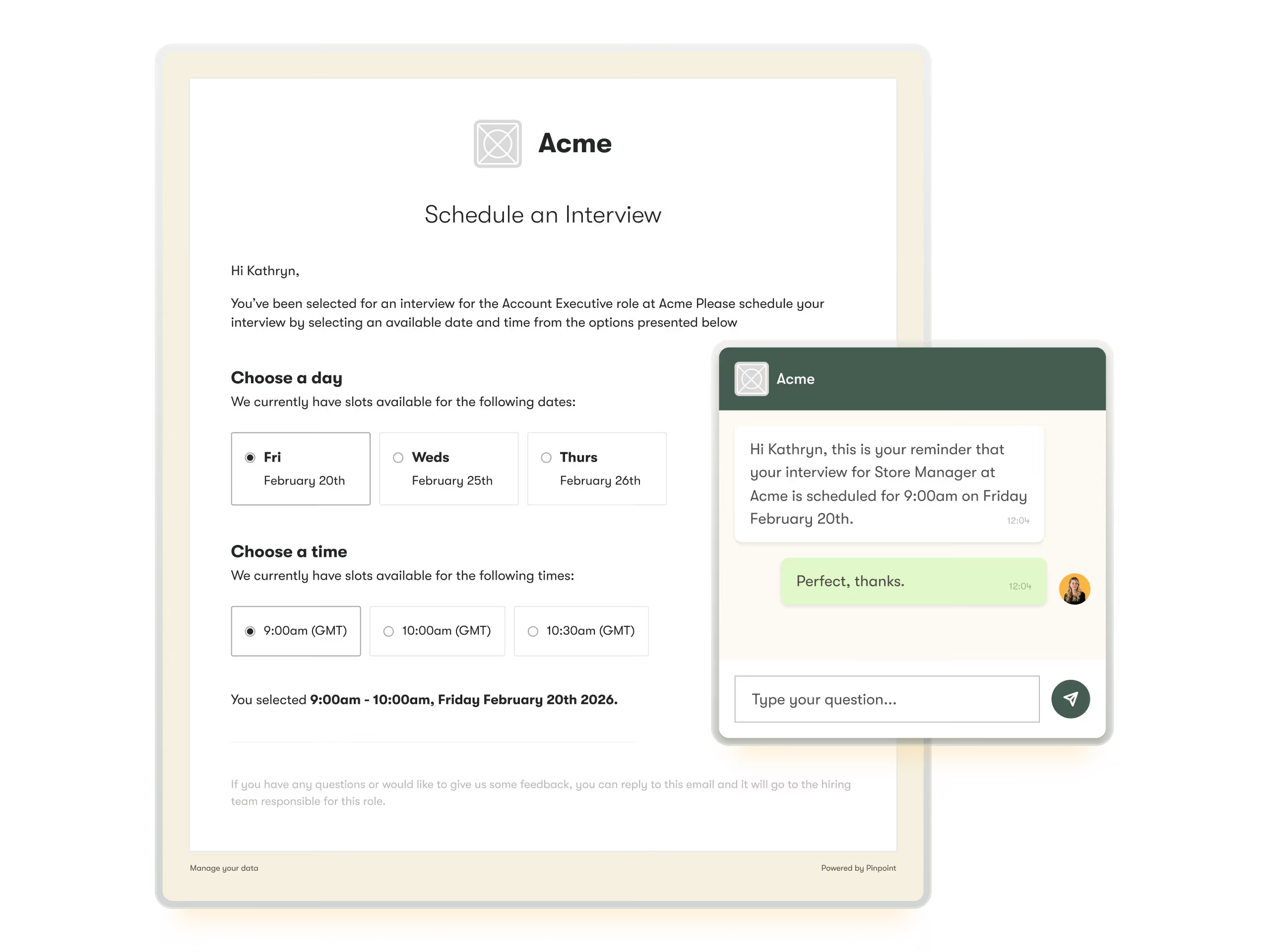
retail-ats-multi-stream-hiring-pinpoint

The 10 essentials of a great retail ATS

The 10 essentials of a great retail ATS

Choosing an ATS for retail hiring means looking beyond standard features and focusing on what actually supports your team’s day-to-day reality. 

The essentials below reflect the capabilities that help you move quickly, stay organized, and create a consistent experience for candidates and store managers across every location.

1. Built for high-volume hiring

You’re often managing large applicant volumes, especially for frontline and hourly roles. Your retail ATS needs to help you filter quickly, manage repeat applicants, and keep every stage of the process moving without creating more work for your team.

2. Designed for a mobile-first candidate experience

Most retail candidates apply on their phones, so your retail ATS should support a simple, mobile-friendly application flow. When the experience feels fast and intuitive, you reduce drop-off and keep more qualified people engaged.

3. Flexible enough for multi-location workflows

Retail organizations rarely follow a single hiring process. Your retail ATS must support variations across stores, regions, and roles while still giving you visibility and consistency. Flexibility should never come at the expense of control.

4. Simple for store managers to use

Store managers play a critical role in hiring, and they need tools that fit into the rhythm of their day. A great retail ATS gives them clear tasks, quick access to candidate information, and straightforward ways to move people forward.

5. Automation that reduces manual work

Automation is essential when you’re balancing high-volume demand with limited time. Your retail ATS should handle repetitive tasks like screening, messaging, and scheduling so you can focus on higher-impact decisions.

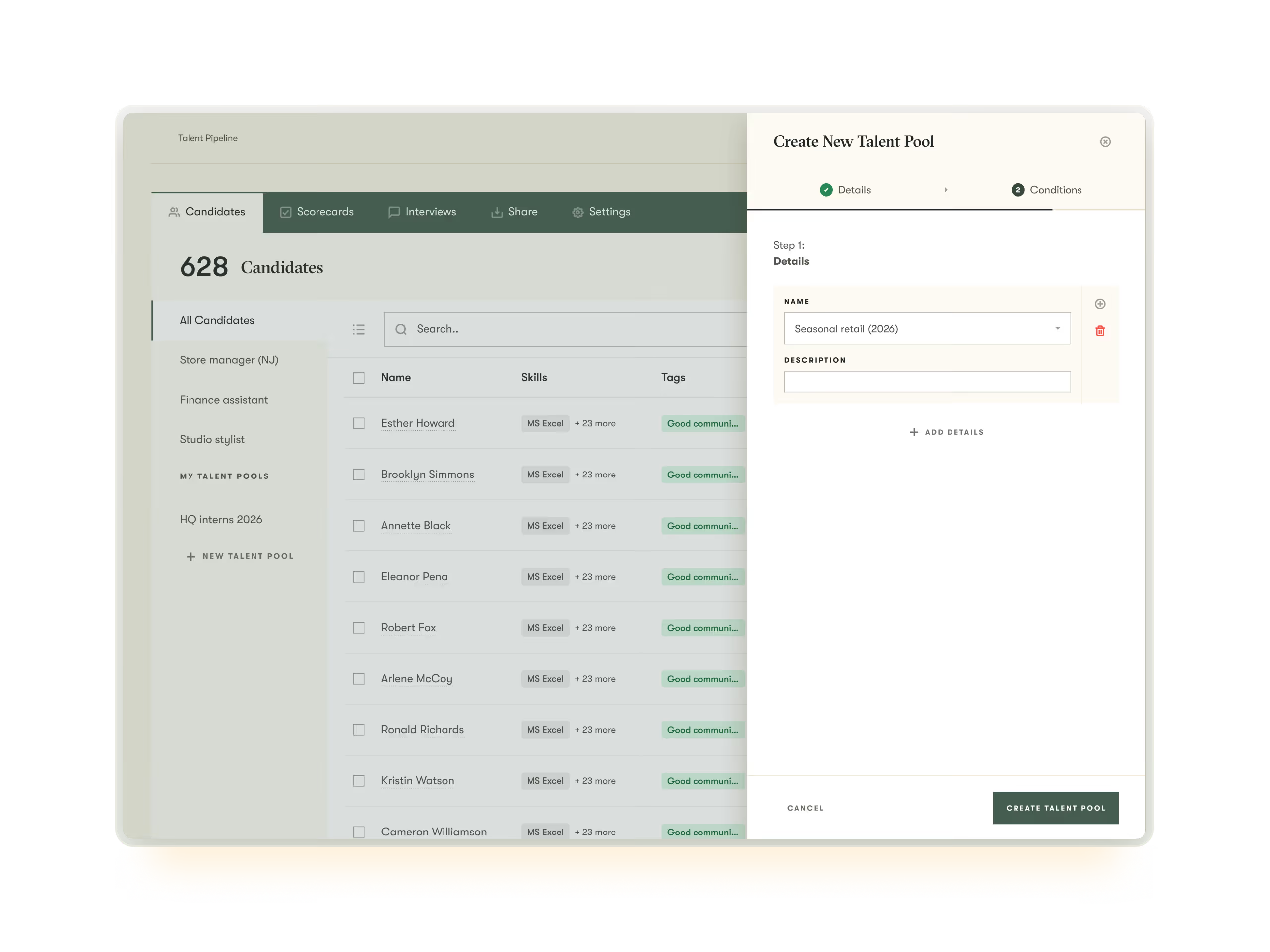
6. Strong talent pools for repeat and seasonal hiring

Retail relies heavily on returning candidates and past applicants who already know the brand. Your retail ATS should make it easy to organize those candidates, re-engage them, and surface strong matches when new roles open.

💡 Read our full guide on How to build a talent pool for seasonal hiring

7. Clear and consistent workflows

You need predictable, structured hiring steps that keep everyone aligned, whether you’re supporting two stores or two hundred. A retail-ready ATS helps you maintain consistency without slowing you down.

8. Tools that support better onboarding

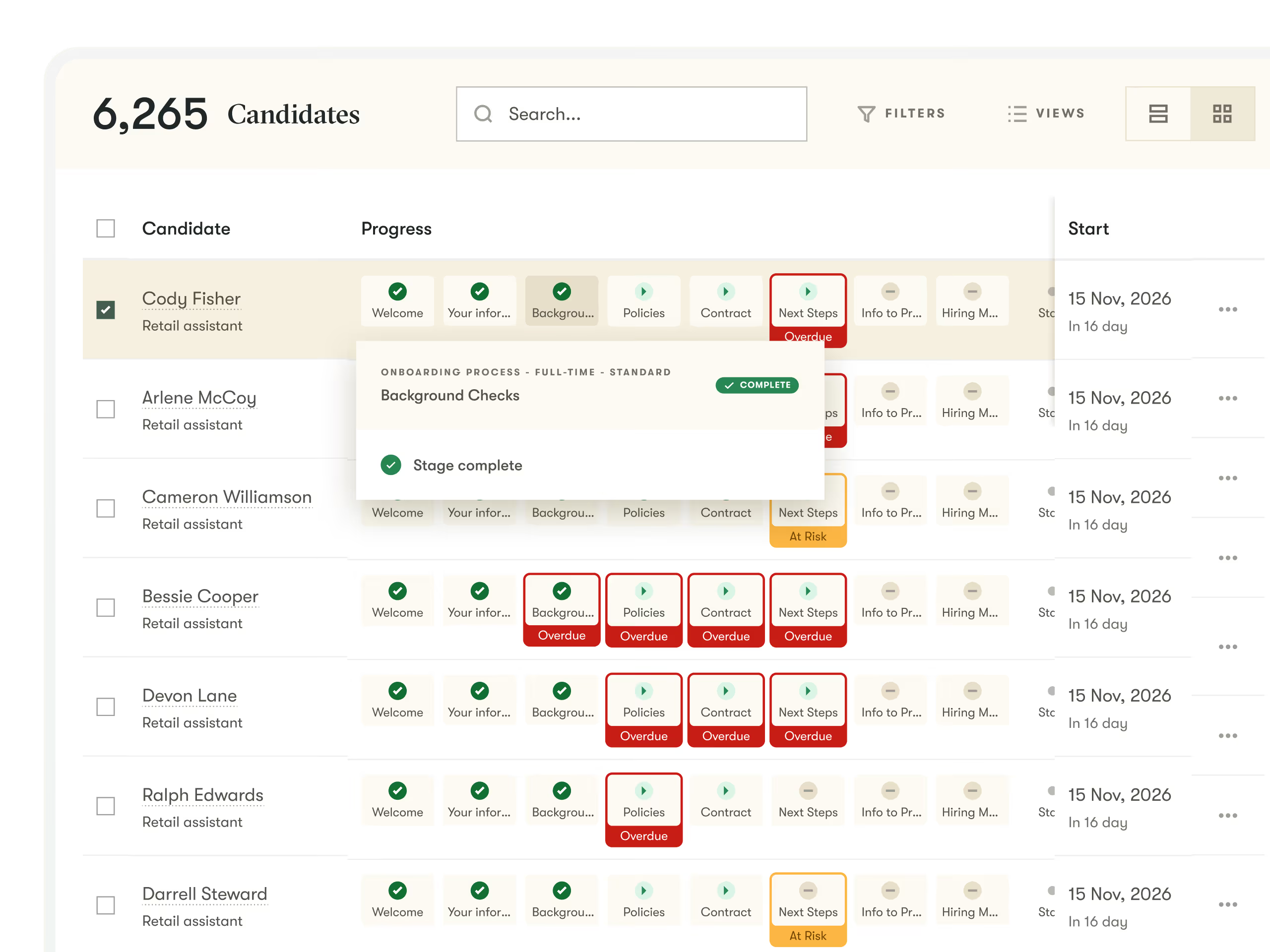
Once you’ve made the hire, onboarding sets the tone for a new employee’s experience. The right ATS supports smooth handoffs and an onboarding flow that’s easy for both managers and new hires to follow.

9. Actionable reporting and visibility

You need insight into bottlenecks, volume trends, and hiring activity across every location. An ATS should give you clear, customizable views that help you forecast demand and share results with business leaders.

10. Integrations that fit your existing tools

Your ATS sits at the center of your hiring process, but it shouldn’t operate in isolation. Strong integrations with HR, payroll, scheduling, and communication tools help you reduce duplication and keep data accurate.

How AI is reshaping what great looks like in a retail ATS

When you’re managing high volumes, multiple locations, and tight timelines, the value of AI comes from how well it supports your workflow rather than how advanced it sounds on paper.

In a retail ATS, AI works best when it helps you reduce noise and focus on what matters. That can mean highlighting candidates who meet your key requirements, surfacing strong past applicants when new roles open, or helping you spot bottlenecks before they slow hiring down. Used well, AI supports better prioritization without taking control away from you or your hiring managers.

AI can also improve consistency. When screening, scoring, and communication follow clear patterns, you reduce bias, speed up decisions, and create a more predictable experience across stores and regions. That matters when different managers are involved at different stages of the process.

The most effective retail ATS platforms use AI quietly and intentionally. They help you move faster, stay organized, and make informed decisions, all while keeping people firmly in charge of hiring outcomes.

A practical checklist for evaluating a retail ATS

When you’re comparing ATS platforms, feature lists alone won’t tell you whether a tool will actually work for your team. 

The checklist below focuses on how well a system supports the realities of retail hiring, from volume and speed to collaboration and consistency.

1. Can it support high-volume hiring without slowing you down?

Look for fast screening tools, bulk actions, and workflows that help you efficiently manage and move large numbers of candidates.

2. Is the candidate experience genuinely mobile-first?

Applications should be quick to complete on a phone, with clear communication and minimal friction at every step.

3. Does it work for store managers, not just recruiters?

Hiring managers should be able to review candidates, schedule interviews, and give feedback without constant support.

4. Can workflows adapt across roles and locations?

You should be able to tailor hiring steps for stores, regions, and head office roles while maintaining overall consistency.

5. Does it reduce manual work through automation?

Prioritize systems that automate screening, scheduling, and communication so your team can focus on decision-making.

6. Does it support repeat and seasonal hiring?

Strong talent pools, easy re-engagement, and visibility into past applicants are essential for retail hiring cycles.

7. Is onboarding part of the same experience?

A smooth handoff from offer to onboarding helps reduce drop-off and sets new hires up for success.

8. Can you see what’s happening across the business?

Reporting should give you clear insight into time-to-hire, bottlenecks, and hiring activity by store or region.

9. Will it integrate with your existing tools?

Your ATS should connect easily with HR, payroll, scheduling, and communication systems.

10. Is implementation and support built for retail teams?

Look beyond the software. Strong onboarding, training, and ongoing support make a real difference to adoption and long-term success.

Where retail ATS decisions often go wrong

When retail teams struggle with their ATS, it’s rarely because the platform lacks features. More often, it’s because the system wasn’t designed for how retail hiring actually works.

Teams that choose tools built for corporate, office-based hiring often find themselves compensating with manual processes once volume increases and store managers get involved. Adoption drops, visibility suffers, and recruiters spend more time chasing updates than moving candidates forward.

The same pattern also shows up with candidate experience. When applications feel slow or communication breaks down, drop-off rises quickly, especially for frontline roles. Teams that prioritize simplicity and speed tend to see more consistent outcomes.

And finally, implementation is another turning point. Platforms that look good in demos can fail without the right rollout and support. Retail teams that succeed treat ATS selection as a long-term partnership, not a software purchase.

In short, if your ATS isn’t prepared for high-volume hiring, you can end up worse off than where you started. The strongest retail ATS decisions focus less on feature count and more on fitting your needs.

Pinpoint in action: How River Island reduced time-to-hire by 28% across 240 stores

Pinpoint has brought a whole new level of efficiency to the team. Nothing’s getting missed. No candidates are being left to wait.

Hannah Clarke
Talent Acquisition Manager, River Island

River Island hires at scale across more than 240 locations, which made visibility, collaboration, and speed critical for their talent team. Their previous ATS relied on manual work and made it hard for recruiters and store managers to stay aligned.

By moving to Pinpoint, River Island introduced a more flexible hiring process, improved the candidate experience, and gave hiring managers clear insight into every stage of hiring. Automation and tailored workflows helped the team stay efficient during high-volume and seasonal hiring, leading to a huge 28% reduction in time-to-hire.

💡 Interested in learning more? Read the full River Island case study

What does a “great” retail ATS mean in 2026?

As hiring teams continue to operate at scale with limited resources, the value of the right ATS becomes clearer. The strongest platforms help you stay organized, adapt to changing demand, and make better decisions at every stage of the process.

If you’re evaluating your next retail ATS, focus on a system built around these principles and designed to support high-volume, multi-location hiring as it works today.

Curious how a retail ATS can support your hiring? See how Pinpoint works for retail teams.

About the author
Alice Dodd author
Alice Dodd
With over seven years in B2B SaaS, Alice creates data-driven content that makes complex topics simple and engaging. She believes every good story (no matter how dry or technical) should feel human, useful, and built on insight.

FAQs about retail ATS platforms

Q

What is a retail ATS?

A

A retail ATS (applicant tracking system) is software that helps you run end-to-end hiring in a retail environment, from requisition and job posting through screening, interviews, offers, and often onboarding. It does everything a standard ATS does, but it’s designed around the operational realities of retail hiring, including:

  • High-volume, hourly recruiting: You’re often dealing with large applicant pools, fast turnaround expectations, and frequent repeat roles.
  • Multi-location hiring: One brand, many stores, sometimes many regions, and different stakeholders at each level.
    Store manager involvement: Hiring decisions don’t live only in HR. Store leaders need quick, simple ways to review candidates and move them forward.
  • Mobile-first candidates: Many applicants discover roles and apply on their phones, so friction in the application flow has a direct impact on conversion.
  • Speed and consistency: Retail hiring works best when processes are repeatable, clear, and easy to run at scale without constant manual intervention.

A good retail ATS becomes the system of record for hiring activity and candidate data, and it also becomes the system that keeps work moving across recruiters, store managers, and candidates.

Q

What features matter most in a retail ATS?

A

The best retail ATS features are the ones that protect speed, reduce admin, and keep hiring consistent across locations. In practice, that usually means prioritizing these capabilities:

High-volume workflow support

  • Knockout questions and eligibility checks (availability, work authorization, certifications)
  • Bulk actions (move stage, reject, message, tag, assign)
  • Fast review experiences (clear candidate summaries, filters, queues, and batch review)
  • Templates for repeat roles (jobs, scorecards, email and SMS, workflows)

Store manager collaboration

  • Hiring manager portals that feel simple and task-based
  • Clear responsibilities (who reviews, who schedules, who approves)
  • Structured feedback (scorecards, rubrics, quick comments)
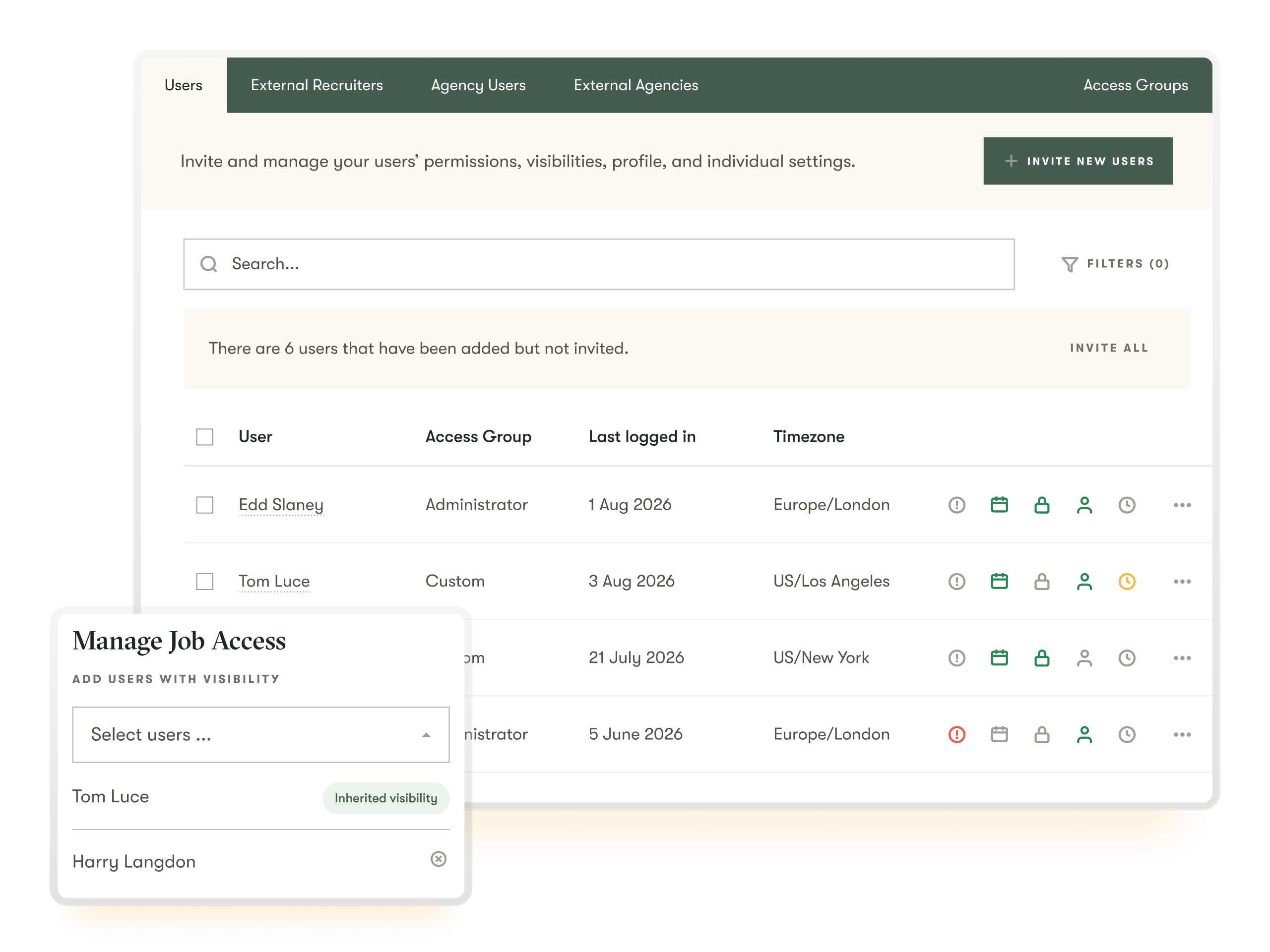
  • Approvals and permissions that match regional and store-level realities

Candidate experience and communication

  • Mobile-friendly applications and low-friction forms
  • Automated updates so candidates don’t go quiet for days
  • SMS and email messaging with personalization
  • Scheduling options that reduce back-and-forth

Automation that reduces real work

  • Auto-routing candidates by location, role type, language, or answers
  • Auto-reminders for managers, interviewers, and candidates
  • Auto-triggered comms after stage changes
  • Workflow rules that prevent bottlenecks and missed steps

Talent pools and re-engagement

  • Tagging and segmentation (seasonal alumni, silver medalists, referrals)
  • Searchable candidate CRM that’s usable in real time
  • Campaign messaging to re-engage past applicants for new openings

Onboarding support

  • Task lists and checklists to standardize store onboarding
  • Document collection and policy acknowledgments
  • Role- and location-specific onboarding steps so managers don’t have to improvise

Reporting and visibility

  • Location-level reporting (store, region, district)
  • Funnel analytics (apply → screen → interview → offer → hire)
  • Time-in-stage and bottleneck reporting
  • Source performance by job board, referral, QR code, etc.

Integrations and security

  • Integrations with HRIS, payroll, background checks, scheduling, and communication tools
  • Role-based access controls, audit logs, and data retention settings

If you’re optimizing for outcomes, the “most important features” are the ones that increase throughput without sacrificing quality: faster screening, faster scheduling, better manager adoption, better candidate conversion, and clearer process control.

Q

Why is mobile experience important for retail hiring?

A

In retail TA, mobile isn’t a nice-to-have. It’s where a huge portion of frontline hiring happens. Mobile experience affects hiring results in a few direct ways:

It impacts application conversion
Retail candidates often apply between shifts, on commutes, or while multitasking. If your application requires long forms, repeated data entry, or a desktop-only experience, you lose candidates quickly. A mobile-first flow reduces drop-off and increases completed applications.

It shapes candidate quality
When mobile apply is smooth, more qualified candidates finish the process. When it’s frustrating, you tend to end up with a smaller pool and more noise.

It determines responsiveness
Retail hiring is time-sensitive. Candidates expect updates quickly, and mobile-friendly communication (especially texting) helps you keep momentum. When communication slows down, candidates accept other offers or disengage.

It supports in-store recruiting
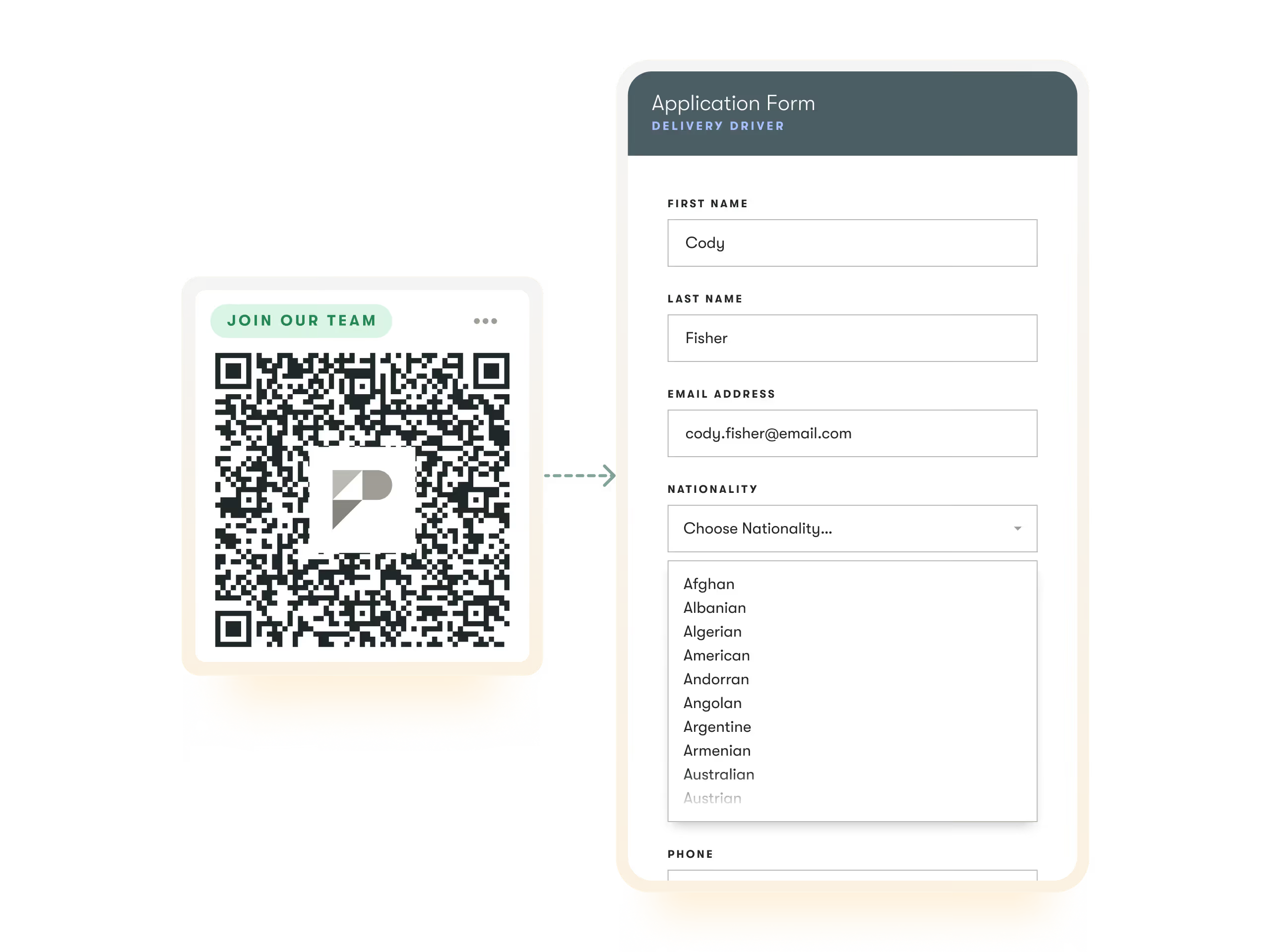
Mobile experiences make QR codes on posters, receipts, bags, and in-store signage actually work. If the QR code leads to a clunky process, the campaign underperforms.

It reduces admin for your team
A strong mobile experience is not just for candidates. It reduces the need for manual follow-ups, re-collecting info, and troubleshooting application issues.

Mobile-first hiring also reinforces brand perception. If the experience feels modern and easy, candidates infer that the employer is organized and respectful of their time.

Q

How does an ATS support seasonal hiring?

A

Seasonal hiring stresses the same parts of your process every year: volume, speed, consistency, and coordination. A retail ATS supports seasonal hiring best when it helps you plan, execute, and re-hire without reinventing the wheel.

Build and reuse a seasonal talent pool

  • Tag seasonal candidates and separate them from other pipelines
  • Track performance signals (hire outcomes, manager feedback, rehire eligibility)
  • Maintain contact consent and communication history so outreach is clean and compliant

Launch repeatable hiring workflows

  • Reuse proven workflows for seasonal roles (screen, interview, offer, checks)
  • Use templates for job posts, messaging, scorecards, and scheduling
  • Standardize steps across stores while allowing local flexibility where needed

Move faster with structured filtering

  • Knockout questions and required criteria reduce wasted review
  • Automated routing assigns candidates to the correct store or region
  • Bulk actions help you process surges without burning out recruiters

Reduce scheduling bottlenecks

  • Self-scheduling, automated interview coordination, and shared availability reduce delays
  • Centralized visibility prevents the “candidate disappears because no one followed up” problem

Re-engage past seasonal staff

  • Seasonal rehires are often your fastest path to quality hires
  • An ATS helps you identify and message previous strong candidates quickly

Protect candidate experience under pressure

Seasonal hiring often breaks candidate experience because teams are stretched. Automated updates, consistent stage movement, and simple applications keep the experience stable even when volume spikes.

If seasonal hiring is a recurring business need, the ATS becomes your repeatable operating system rather than a scramble tool.

Further reading