


How to make seasonal hiring in hospitality more manageable
The pressure of seasonal hiring in hospitality doesn't have to catch you off guard every single year.

Article
6 min
Last updated
February 3, 2026
The pressure of seasonal hiring in hospitality doesn't have to catch you off guard every single year.

When summer bookings surge and seasonal events increase demand, hospitality teams face a familiar challenge: finding enough capable people to keep up with guests.
Teams need to keep operations running smoothly and stay one step ahead in a competitive industry. But beyond just filling roles, bringing on the right people is essential for delivering a great guest experience.
The challenges of seasonal hiring are nothing new for most hospitality teams. No matter how many times you’ve done it, managing the cycle never really gets easier.
Almost half ofhospitality organizations report staffing shortages during peak season, underscoring how widespread the problem is.
Seasonal hiring will always be part of the hospitality industry, but there are ways to make it more manageable. With good preparation, it can change from a recurring pressure point into an adaptable process that teams can rely on year after year.
In this article, we’ll explore some practical approaches that organizations can use to ease pressure during peak periods. We also outline what a smooth, repeatable seasonal hiring process really looks like.
Hiring seasonal staff in hospitality is stressful for many reasons. Teams are often sourcing, interviewing, and onboarding at speed, with no time to spare, especially when roles span multiple locations and require different skill sets.
On top of that, most hospitality teams face a set of recurring challenges, including:
Hospitality organizations are used to competing for a limited pool of talent. However, interest in summer jobs is reaching record highs earlier and earlier each year, showing just how competitive the seasonal job market has become. Businesses need to move faster than ever to avoid losing out to competitors.
Despite more interest in seasonal roles, around 65% of hospitality organizations still report difficulty recruiting skilled staff. During peak periods, this can leave businesses short-handed and put extra pressure on permanent employees, making it harder to deliver a consistent guest experience.
In the US, the annual staff turnover rate in the hospitality industry is around 70-80%, compared to 25-30% in other sectors. This is partly due to the industry’s structure, but lower wages, fewer benefits, and high workloads are also factors.
Working long hours during peak season can be especially stressful for temporary employees. Finding the right fit for each role and providing solid training helps to reduce the risk of early employee turnover.
The scale of seasonal hospitality hiring adds to the admin pile. More background checks, more safety training, and more employee paperwork must be completed accurately and on time. Any mistakes during this process could lead to regulatory risks, legal exposure, or operational delays.
While seasonal hiring is inherently unpredictable, certain recruitment patterns can further complicate the process.
Some of the most frequent mistakes include:
Starting each season afresh may feel like the best way to shake off problems from the year before, but it also leads to repeated mistakes.
It’s easy to forget what worked and what didn’t, or start complex processes from scratch unnecessarily. This can leave teams reacting under pressure rather than building on lessons learned.
Without a smart screening process, teams may not always find the right fit for a role. Supervisors spend extra time correcting mistakes or supporting staff who are struggling, while inconsistent decisions slow the process down, leaving roles unfilled longer. Over time, this can affect service quality and increase turnover.
When managers and staff aren’t aligned, it leads to confusion, missed tasks, and unnecessary stress. Teams often spend more time chasing updates than hiring, which intensifies the pressure during already busy periods.
In organizations with multiple locations, this misalignment may also create hiring inconsistencies and cause strong candidates to fall through the cracks.
Relying on a narrow set of applicants makes it harder to fill roles quickly. If someone turns down an offer or drops out mid-season, it may be tough to find a replacement. Limited options also leave organizations less flexible if skill requirements change unexpectedly.
💡 If these issues sound familiar, take a look at our guide on how to build a talent pipeline that never starts from scratch
When organizations face the same seasonal staffing challenges in hospitality year after year, sustained success comes down to good preparation.
Starting the search early is important. It gives organizations more time to forecast demand, attract the right candidates, screen them carefully, and offer comprehensive training before the season begins. Early planning also helps businesses stay ahead of local competition and secure the best talent before competitors do.
Standardizing hiring workflows can save time. Clear screening criteria,structured interview scheduling, and coordinated onboarding across multiple locations make the process smoother and easier to manage. Repeatable workflows also allow hiring teams to respond quickly when adjustments are needed and refine the process season after season.
Effective communication is essential. Tools such as shared dashboards, automated reminders, and real-time candidate tracking help every team member follow the same workflow consistently. Regular check-ins, clear timelines, and centralized updates keep everyone on the same page, preventing confusion and reducing duplicated effort. These practices also make it easier to communicate with candidates, which in turn improves their experience and boosts acceptance rates.
Using data to guide decisions makes hiring easier. After each hiring cycle, analyzing outcomes can uncover opportunities to improve for the next year.
Expanding sourcing channels also makes it easier to fill roles quickly and reliably next year. Hospitality applicant tracking systems can help hospitality teams by consolidating candidate data into one centralized database that allows you to attract, interview, and hire from the same platform.
Ultimately, the success of seasonal hiring in hospitality depends on being proactive rather than reactive.
Leveraging the right tools helps organizations stay in control, manage candidates, and respond quickly when demand spikes, putting them in the best position to deliver great service during high season.
Even with careful planning, the difference between a stressful season and a smooth one comes down to how the process works in practice.
A well-run seasonal hiring process tends to feel and operate in ways that make life easier for everyone.
When roles and volume expectations are clearly defined, everyone knows what’s happening, when tasks need to be completed, and who’s accountable. This keeps recruitment on track when things get busy.
Teams benefit from visibility over upcoming staffing needs and potential challenges. Planning ahead allows managers to anticipate gaps and deploy resources more effectively, reducing stress and avoiding last-minute scrambles.
A strong seasonal hiring process is easy to adapt without creating chaos. Flexibility allows teams to respond quickly to changes in demand or skill requirements.
When roles, decisions, and candidate progress are visible across the team, it’s easier to collaborate throughout the process and maintain compliance with hiring regulations and internal policies.
An easily managed process allows assessments and interviews to be carried out quickly and consistently. It also prioritizes onboarding by centralizing offer letters, contracts, and training materials so teams can get seasonal staff ready to perform from day one.
A good process constantly evolves. Teams that continually refine their screening, interviewing, and onboarding tools will hone a smoother seasonal hiring cycle. They will be able to spend less time firefighting and more time focusing on people and operations year-round.
With the right tools in place, a manageable seasonal hiring process is possible even for multi-location operations handling hundreds of hires at once.
For example, hotel chains with multiple locations often need to hire hundreds of temporary employees each summer. Even when recruitment starts early, hiring managers will come under pressure to review hundreds of applications before the season starts.
If locations end up short-staffed, guest service may suffer, potentially leading to negative reviews and lost revenue. But there are ways to make this process achievable at scale.
More than half of hospitality HR professionals are already using AI-powered recruitment tools to speed up hiring and improve candidate engagement.
One example is citizenM, a global hotel chain with more than 36 locations worldwide.
After becoming frustrated with manual processes that were slowing recruitment, the team introduced Pinpoint and reduced time-to-hire by 65%. The team now meets its promise to respond to candidate applications within two weeks.
“Having everything within one flow hosted by Pinpoint—the career site, into the application, and how we manage the application internally—has made everything very smooth.”
Michael Easton
Head of Employee Value Proposition, citizenM
As citizenM found, the right hiring software automates repetitive tasks, coordinates workflows across locations, and gives teams visibility into every stage of the hospitality seasonal recruitment process.
It can also transform seasonal hiring in hospitality by:
With earlier planning, clearer roles, and repeatable processes, hospitality teams can manage high-volume, multi-location hiring efficiently and create a better experience for both candidates and employees.
💡 Interested in how an ATS works for hospitality? We have even more case studies for you to see Pinpoint in action.
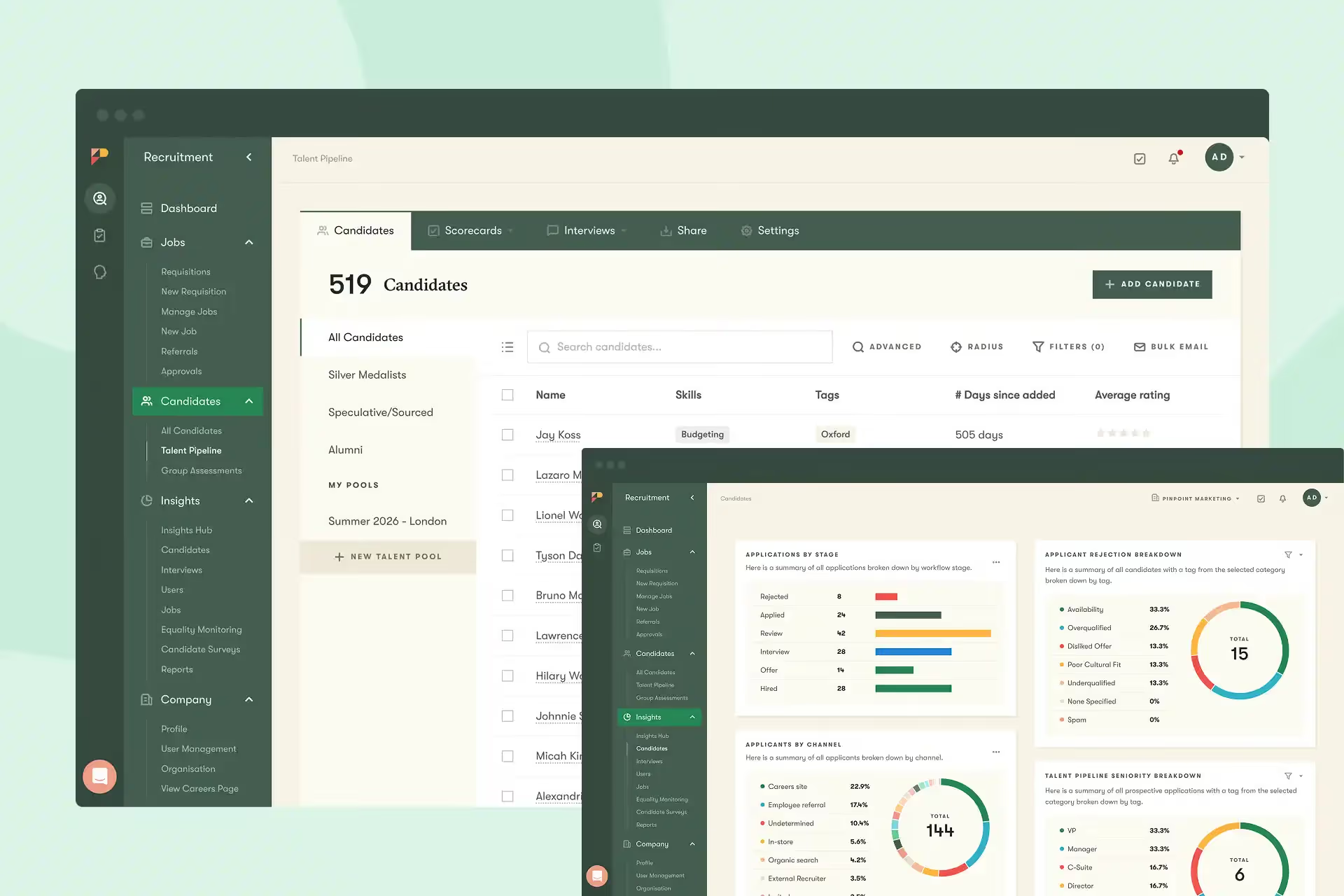
Hiring seasonal staff in hospitality will always be challenging, but it doesn’t have to be chaotic. Organizations that focus on preparation, structure, and consistency can navigate peak periods more confidently and take the pressure off hiring teams.
By shifting how your team approaches peak-season recruitment, you can stay ahead of challenges, reduce last-minute stress, and strengthen your overall hiring strategy.
Explore how Pinpoint can help you streamline hospitality peak season hiring.
With over seven years in B2B SaaS, Alice creates data-driven content that makes complex topics simple and engaging. She believes every good story (no matter how dry or technical) should feel human, useful, and built on insight.