


Why healthcare teams need a different kind of ATS
In healthcare, a vacancy isn't just an open role. It's immediate pressure on the people already covering the gap.

Article
4 min
Last updated
January 23, 2026
In healthcare, a vacancy isn't just an open role. It's immediate pressure on the people already covering the gap.

Delays in healthcare hiring have an immediate impact. Teams are stretched, rotas get tighter, and patient care can suffer.
With ongoing staffing shortages and high turnover, many healthcare organizations are hiring constantly, under real-time pressure.
This kind of hiring isn’t simple. As a healthcare team, you’re recruiting for a huge mix of clinical and non-clinical roles, each with different requirements, timelines, and levels of regulation. Never mind the admin: credentials need to be verified, licenses tracked, and processes kept consistent enough to withstand audits.
Generic hiring systems weren’t built for that level of complexity.
Slow or inconsistent hiring in patient-facing environments comes at a real cost.
That’s why healthcare teams need a different kind of applicant tracking system (ATS). This article is a practical guide to the ATS features that matter most in healthcare, and how to evaluate them against the realities of delivering safe, consistent care.
Healthcare hiring comes with operational pressures that most industries don’t face. This complexity shows up in volume, urgency, and the real-world consequences of roles staying open.
Many healthcare roles require active licenses and certifications before someone can start work. These credentials need to be verified during hiring and tracked over time to support ongoing compliance.
Whether this capability lives inside your ATS or as part of your wider hiring stack, relying on manual checks, spreadsheets, and follow-ups quickly creates risk and delays. Investing in a platform that supports this through native functionality or integration makes the process far more reliable.
Healthcare hiring is subject to strict regulatory oversight. Teams need clear records of background checks, training, and qualifications, and they need to be able to produce that information quickly during audits or inspections. Disconnected workflows make it harder to maintain consistent hiring standards across teams and locations.
Many healthcare organizations are hiring at scale while also recruiting for highly specialized positions. Frontline roles like nurses, medical assistants, and support staff often need to be filled continuously, while specialist clinicians and senior leaders require longer evaluation cycles and deeper screening.
In the US, demand for nurses remains extremely high, with projections showing around 190,000 registered nurse openings each year through the end of the decade. Managing both ends of that spectrum at the same time adds real operational strain.
Healthcare hiring rarely falls to one person or team. Recruiters, HR, clinical leaders, compliance teams, and operations all play a role. Each group needs access to the right information at the right time. When systems don’t support shared visibility and clear handoffs, decisions slow down, and vacancies stay open longer.
Staffing gaps in healthcare have immediate consequences. More than 100 million people in the USlive in areas classified as Health Professional Shortage Areas,which means open roles can directly limit access to care.
At the same time, workforce attrition remains high, with over 130,000 nurses leaving the profession since 2022. When roles stay open, remaining staff face heavier workloads, burnout increases, and care delivery becomes harder to sustain.
Together, these pressures explain why healthcare teams need ATSs that support speed, accuracy, and coordination at scale. The right features help teams hire faster without sacrificing compliance, consistency, or care quality.
No matter what industry you’re in, the value of an ATS is never in how many features it offers. It’s about how well those features work together.
These are the ATS features healthcare teams should prioritize, and what to look for when evaluating platforms.
What it is: Support for managing professional licenses, certifications, renewals, and role-specific requirements, either within the ATS or through integrated credentialing tools that sit directly in the hiring workflow.
Why it matters in healthcare: Healthcare hiring cannot move forward without verified credentials, and those requirements often vary by role, department, and location. When credential tracking is connected to hiring, teams can move candidates forward with confidence instead of stopping at the final stage to chase paperwork.
What happens when it’s missing: Offers stall, start dates slip, and hiring teams end up doing last-minute checks outside the system. That increases risk and creates delays right when teams need people on the floor.
What to look for when evaluating ATS platforms: Look for support for role-based requirements, clear handoffs to credentialing systems, automated alerts for expirations, and audit trails that are easy to access when needed.
Healthcare-specific value: This reduces compliance risk, prevents last-minute onboarding delays, and supports audits and inspections without adding manual work.
What it is: Controls that protect sensitive candidate and employee data and support healthcare compliance requirements, including HIPAA in the US.
Why it matters in healthcare: Healthcare hiring involves personal, medical, and professional information that must be handled carefully. Strong security and access controls help teams stay compliant while still moving quickly.
What happens when it’s missing: Documents get shared over email, access becomes inconsistent, and teams lose confidence in where sensitive data lives. That creates risk and slows decision-making.
What to look for when evaluating ATS platforms: Role-based access controls, secure document storage, clear permission settings, and documented security standards that scale across locations.
Healthcare-specific value: This protects sensitive data and helps teams maintain consistent compliance across sites and departments.
What it is: High-volume hiring workflows allow healthcare teams to manage large numbers of candidates efficiently without losing visibility, structure, or control. This includes bulk actions, automated screening steps, reusable role templates, and workflows that can absorb sudden spikes in demand.
Why it matters in healthcare: Many healthcare organizations are almost always hiring for frontline roles. Hiring teams need to move quickly while still applying consistent screening, communication, and decision-making.
What happens when it’s missing: Without high-volume support, recruiters spend most of their time on manual admin instead of evaluating candidates. Over time, this creates a cycle where teams are constantly understaffed, even though candidates are applying.
What to look for when evaluating ATS platforms: Look for bulk actions that reduce repetitive work, automated screening steps that surface qualified candidates faster, and role templates that make it easy to spin up consistent workflows for recurring positions. The system should scale smoothly during busy periods without becoming harder to manage.
Healthcare-specific value: This supports continuous hiring for frontline roles, reduces recruiter workload, and helps teams meet staffing demand without sacrificing quality or consistency.
What it is: Multi-location and multi-role hiring support allows teams to manage different hiring needs across hospitals, clinics, departments, and role types within a single ATS, while still maintaining shared standards and oversight.
Why it matters in healthcare: Healthcare organizations often operate across multiple sites, each with its own staffing pressures and timelines. At the same time, leadership teams need confidence that hiring standards remain consistent across the organization.
What happens when it’s missing: When systems can’t support this complexity, teams create workarounds. Hiring processes vary by location, data becomes fragmented, and leadership loses a clear view of what is actually happening across the organization. That fragmentation makes it harder to identify risks and improve hiring over time.
What to look for when evaluating ATS platforms: Look for location-based workflows, shared talent pools, centralized reporting, and permissions that allow local teams to act independently while still aligning with organization-wide standards.
Healthcare-specific value: This enables consistent hiring standards across hospitals, clinics, and care sites, while still giving local teams the flexibility they need to respond to urgent staffing needs.
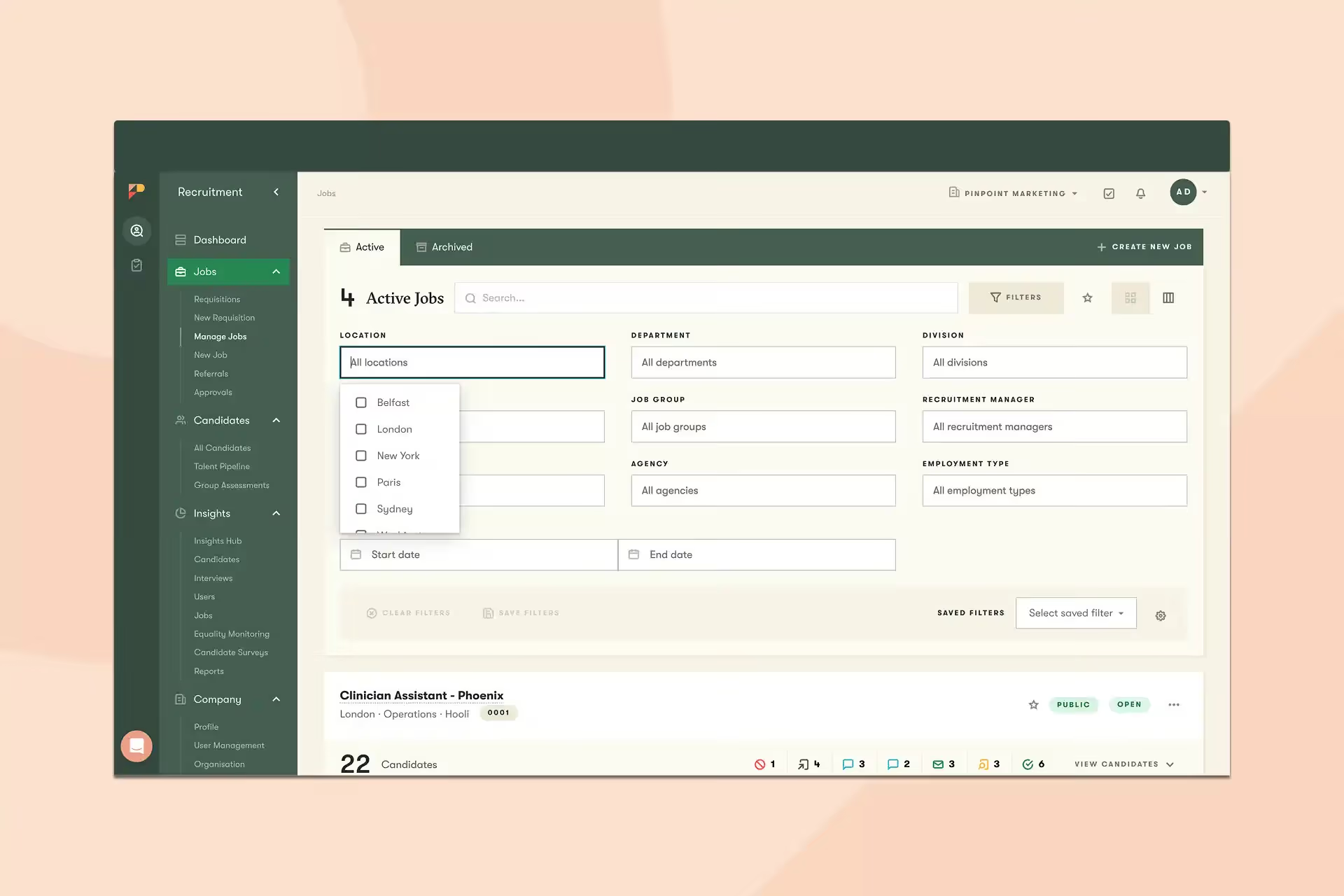
What it is: Structured screening and shortlisting give hiring teams a consistent way to evaluate candidates using standardized questions, shared criteria, and visible decision-making.
Why it matters in healthcare: Healthcare hiring often involves multiple reviewers and high stakes. Consistent screening helps teams assess candidates fairly, focus on role-critical requirements, and make decisions that stand up to scrutiny.
What happens when it’s missing: Screening becomes subjective and varies by hiring manager or location. Decisions are harder to justify later, and teams struggle to explain why one candidate moved forward while another did not.
What to look for when evaluating ATS platforms: Look for configurable screening questions, shared scorecards, and visibility into feedback across the hiring team so decisions feel aligned and intentional.
Healthcare-specific value: This reduces bias, improves quality of hire, and supports fair, defensible hiring decisions in regulated environments.
What it is: Interview coordination tools help teams schedule, manage, and track interviews involving multiple stakeholders with limited availability.
Why it matters in healthcare: Clinical leaders often balance interviews alongside patient care and shift work. Delays compound quickly when scheduling isn’t simple or transparent.
What happens when it’s missing: Interviews drag on, candidates disengage, and strong applicants accept offers elsewhere while teams wait for calendars to align.
What to look for when evaluating ATS platforms: Look for support for multiple interviewers, easy scheduling, clear ownership of next steps, and visibility into interview progress.
Healthcare-specific value: This reduces time-to-hire and minimizes disruption to clinical schedules while keeping candidates engaged.
What it is: Tools that help healthcare teams communicate clearly and move candidates through the hiring process quickly, including timely updates, clear next steps, and mobile-friendly applications.
Why it matters in healthcare: Healthcare candidates are often balancing shift work, certifications, and multiple job options at the same time. Long applications, slow responses, or unclear timelines make it easy for them to disengage, even when they’re qualified and interested.
What happens when it’s missing: Candidates drop out mid-process or accept other offers before interviews are scheduled. Teams lose strong applicants and end up reopening roles that could have been filled.
What to look for when evaluating ATS platforms: Look for fast, automated communication, simple application flows, and clear visibility into where candidates are in the process, so no one is left waiting.
Healthcare-specific value: This reduces candidate drop-off and helps healthcare organizations compete more effectively for in-demand talent.
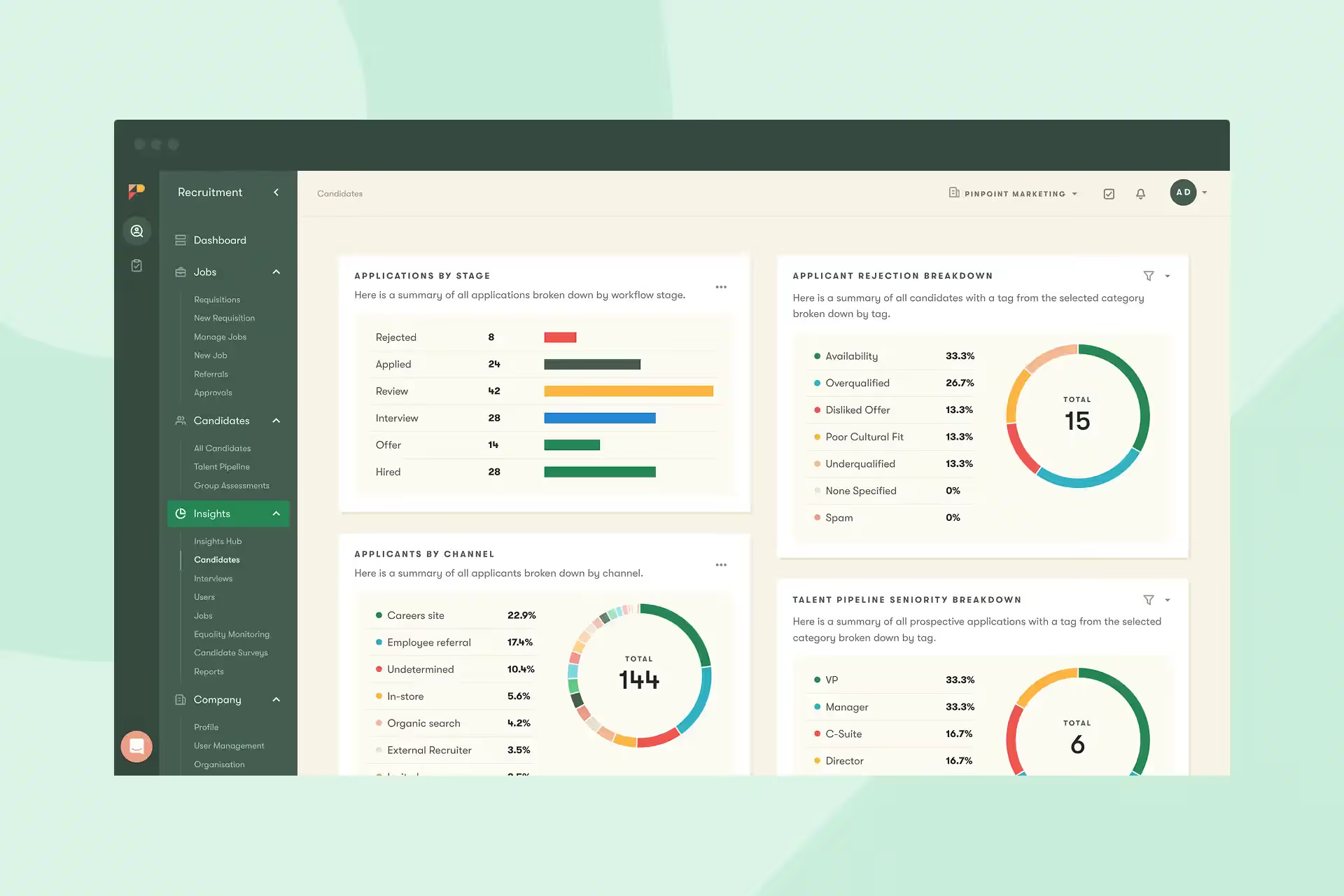
What it is: Reporting and workforce insights give hiring teams visibility into how their hiring process is performing, from time-to-hire and candidate drop-off to performance by role, department, and location.
Why it matters in healthcare: Staffing challenges in healthcare often build over time. Without clear data, leaders only see the problem once roles stay open, teams are stretched, or care delivery is already affected. Reporting helps teams spot patterns early and understand where hiring slows down or breaks.
What happens when it’s missing: Decisions rely on anecdotal feedback and gut instinct. Teams react to shortages instead of planning for them, and it becomes harder to explain hiring needs or justify resourcing decisions.
What to look for when evaluating ATS platforms: Look for clear, accessible reporting on time-to-hire, drop-off points, and hiring performance by role and location. Insights should be easy to share and use, not buried in complex dashboards.
Healthcare-specific value: This helps teams identify staffing risks early, support workforce planning and budgeting, and move from reactive hiring to more proactive decision-making.
Some of the biggest hiring problems in healthcare don’t come from missing core functionality. They come from small gaps that quietly slow teams down or create risk over time.
Healthcare teams often overlook:
These details often determine whether an ATS actually supports healthcare hiring, or quietly adds friction as teams scale.
Evaluating ATS platforms for healthcare works best when it’s treated as a buying decision, not a feature comparison.
The goal is to understand whether a system will support your real hiring needs, not just whether it looks good in a demo.
Below is a practical checklist healthcare teams can use when assessing ATS options.
Strong vendors should be able to answer these with healthcare-specific examples, not just generic product language.
These are often signs that a platform wasn’t designed with healthcare complexity in mind.
Healthcare hiring is too complex to evaluate ATS platforms in isolation. Using a structured buyer’s guide will help your team pressure-test assumptions and avoid expensive mistakes.
In healthcare, hiring decisions have real consequences. When roles stay open, or processes break down, patient care, team wellbeing, and operational stability all feel the impact.
The ATS a healthcare team chooses will shape how quickly roles are filled, how consistently candidates are assessed, and how confidently teams stay compliant. The right features reduce risk, remove friction, and support better hiring outcomes over time.
Unsure where to start? Our Buyer’s Guide breaks down what to look for in an ATS that supports healthcare hiring at scale.
With over seven years in B2B SaaS, Alice creates data-driven content that makes complex topics simple and engaging. She believes every good story (no matter how dry or technical) should feel human, useful, and built on insight.