AI Match Score

Transparent AI Scoring to surface the strongest candidates first

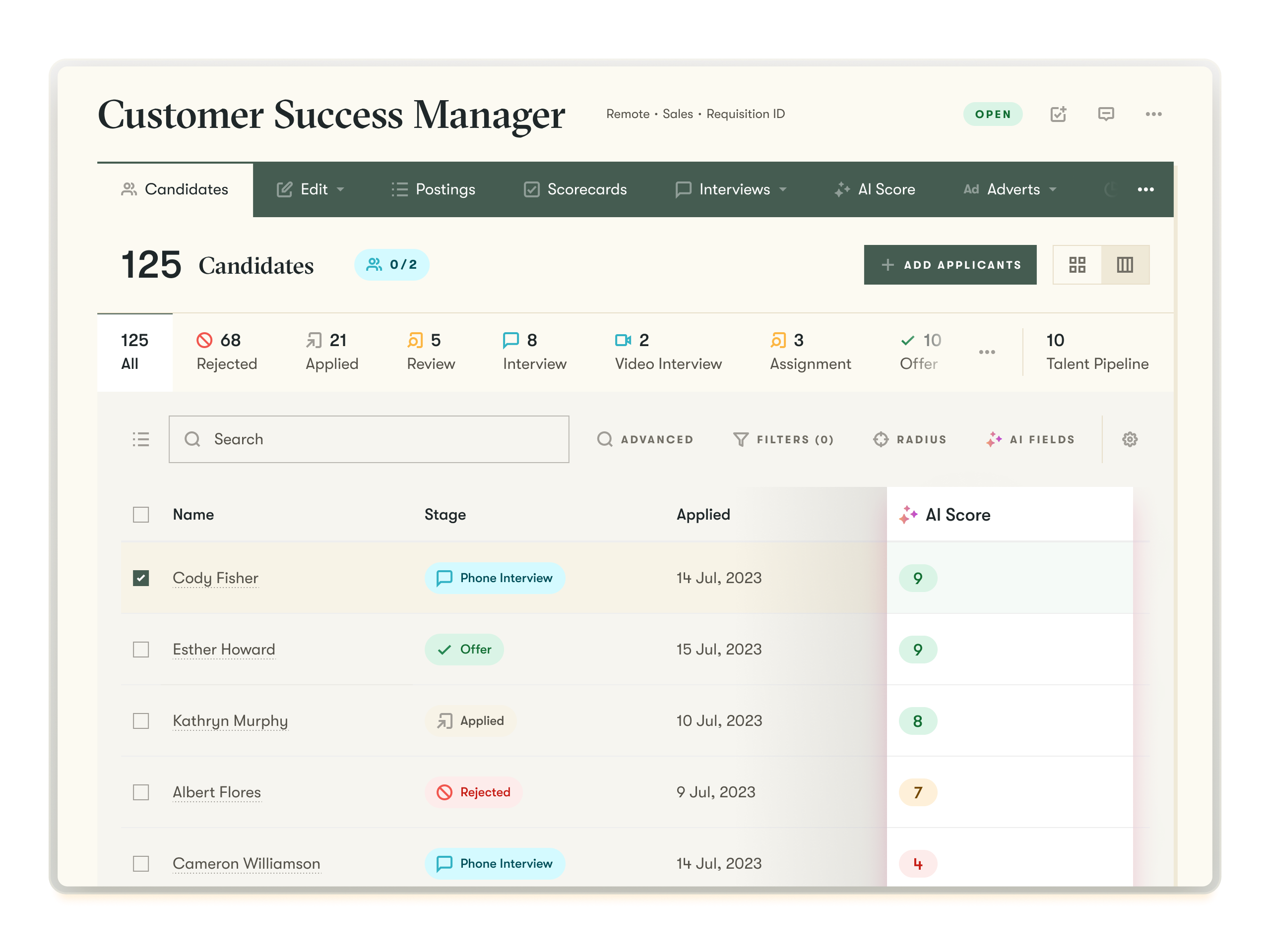
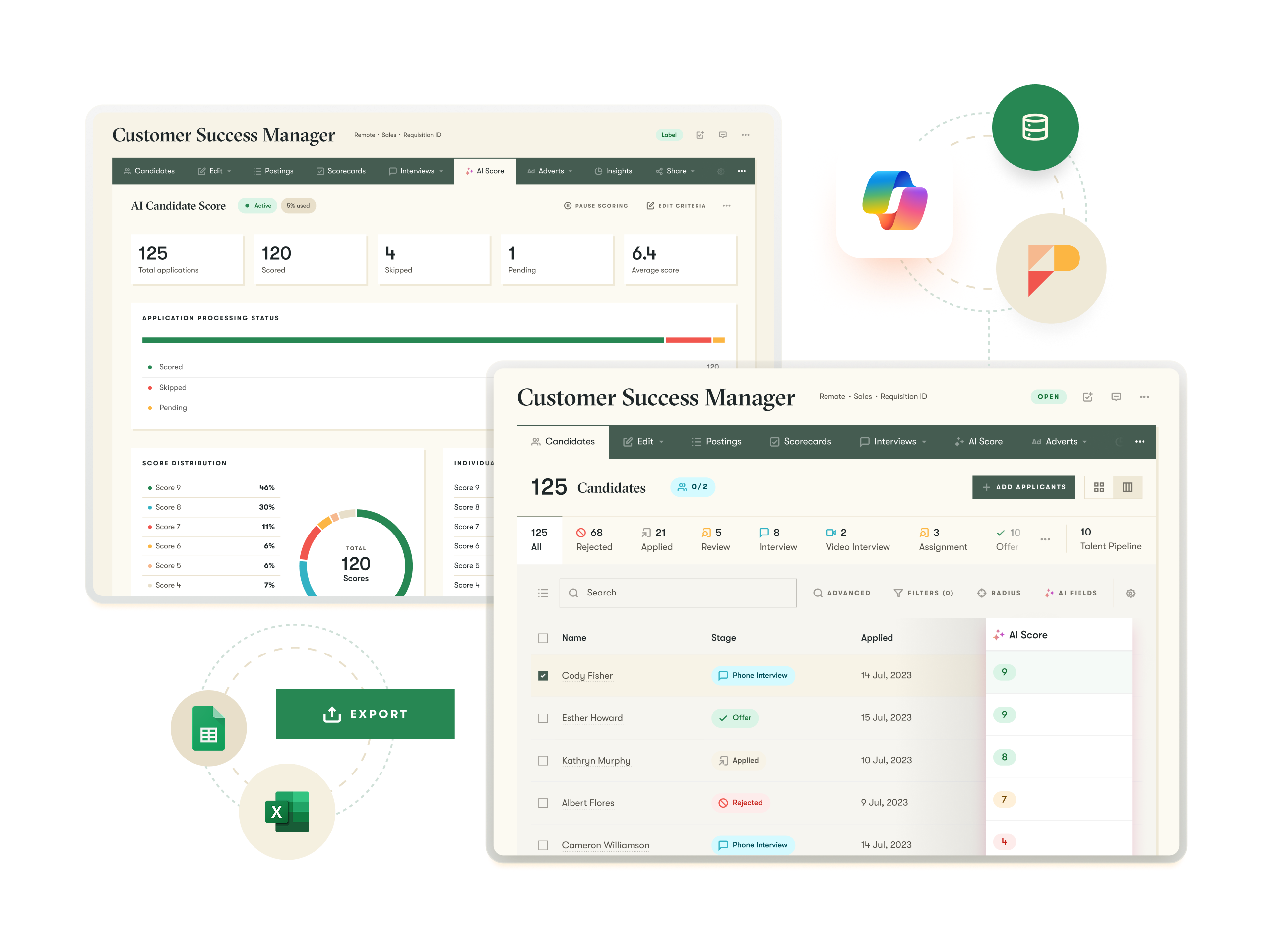
AI Match Score evaluates every applicant against criteria you set, scores them instantly, and makes sure your strongest candidates are waiting at the top when you're ready to review.

Focus on the strongest candidates first


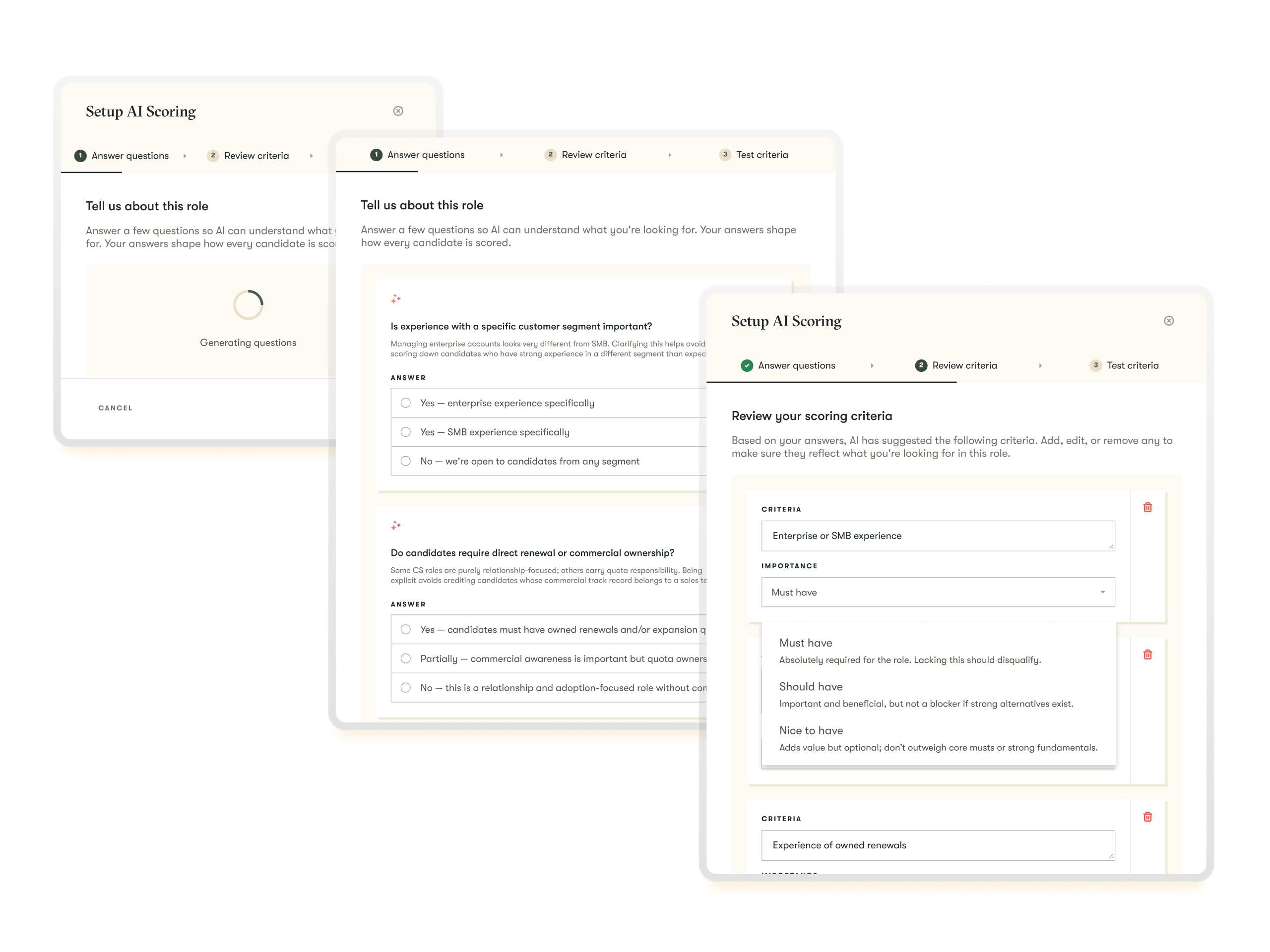
Answer a few questions about the role and Pinpoint generates up to 10 criteria. Mark each one as must-have, preferred, or nice to have, then edit until it reflects how you actually think about the role.

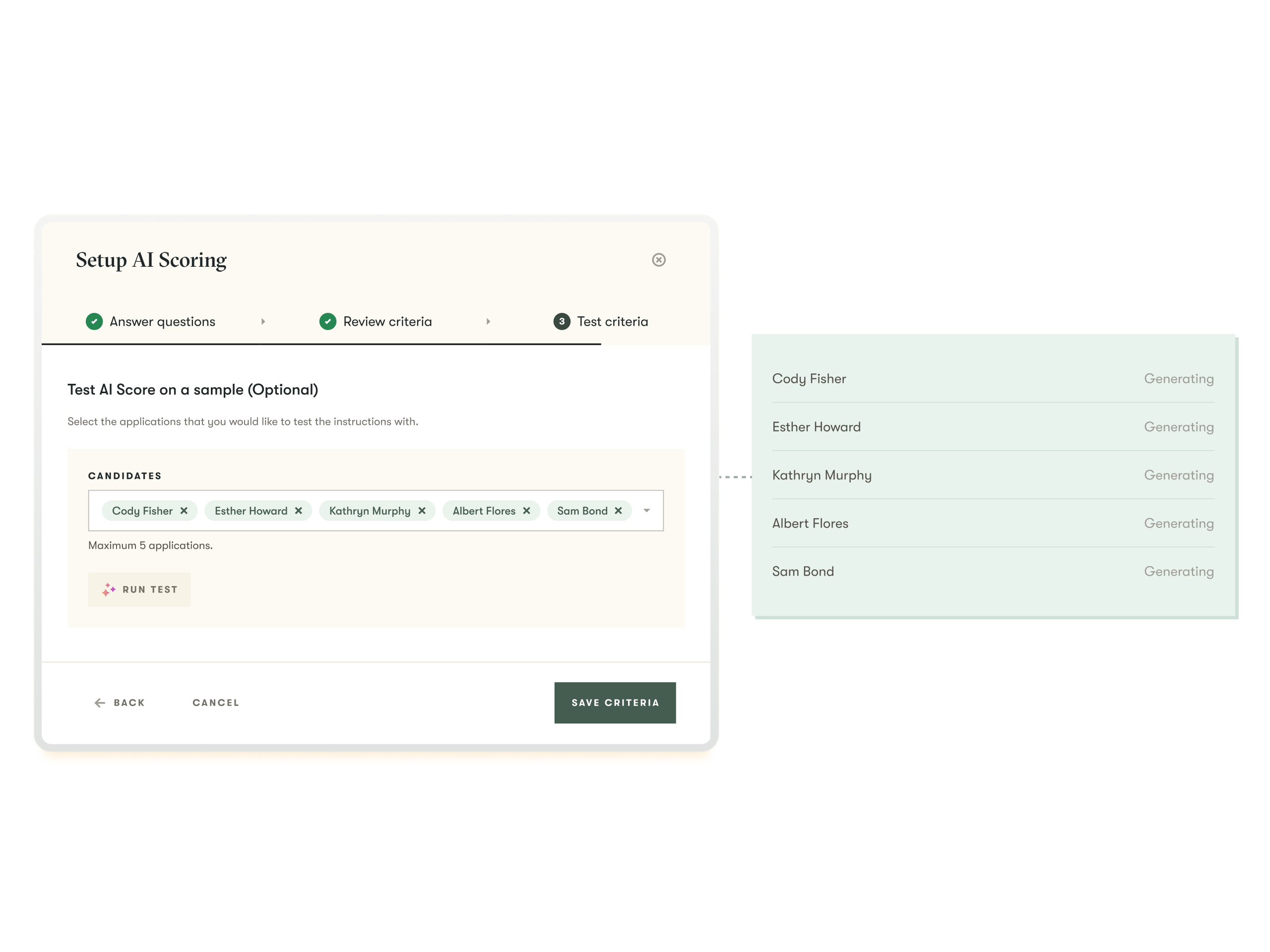
Review, edit, or refine the criteria before candidates are scored, so it reflects what actually matters for the role. You stay in control of the inputs, not locked into a fixed model.

Once you're happy with the setup, you can choose where to apply AI Match Score and it will run on each application, including anyone already in the pipeline. Everyone gets evaluated against the same bar.

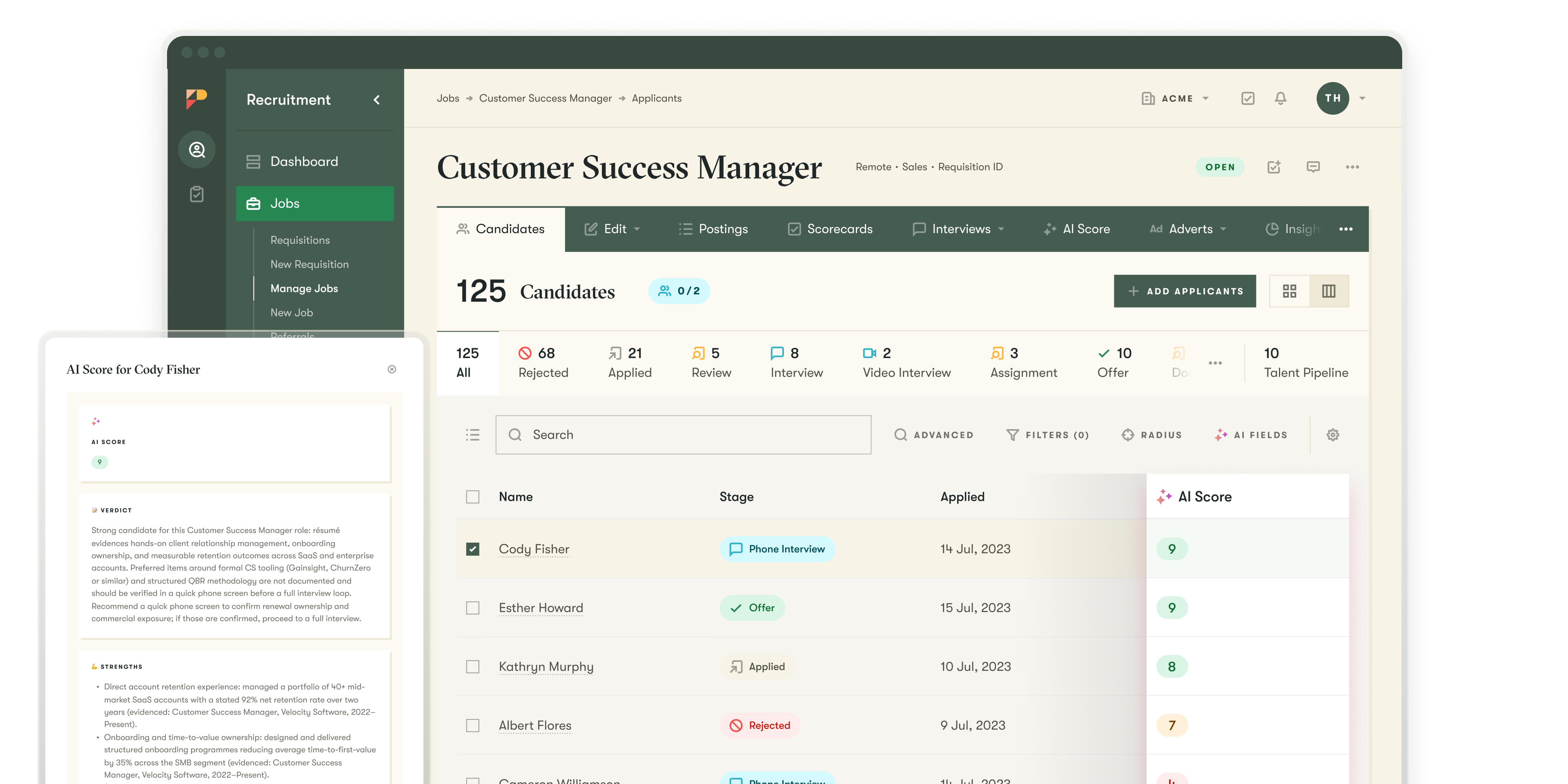
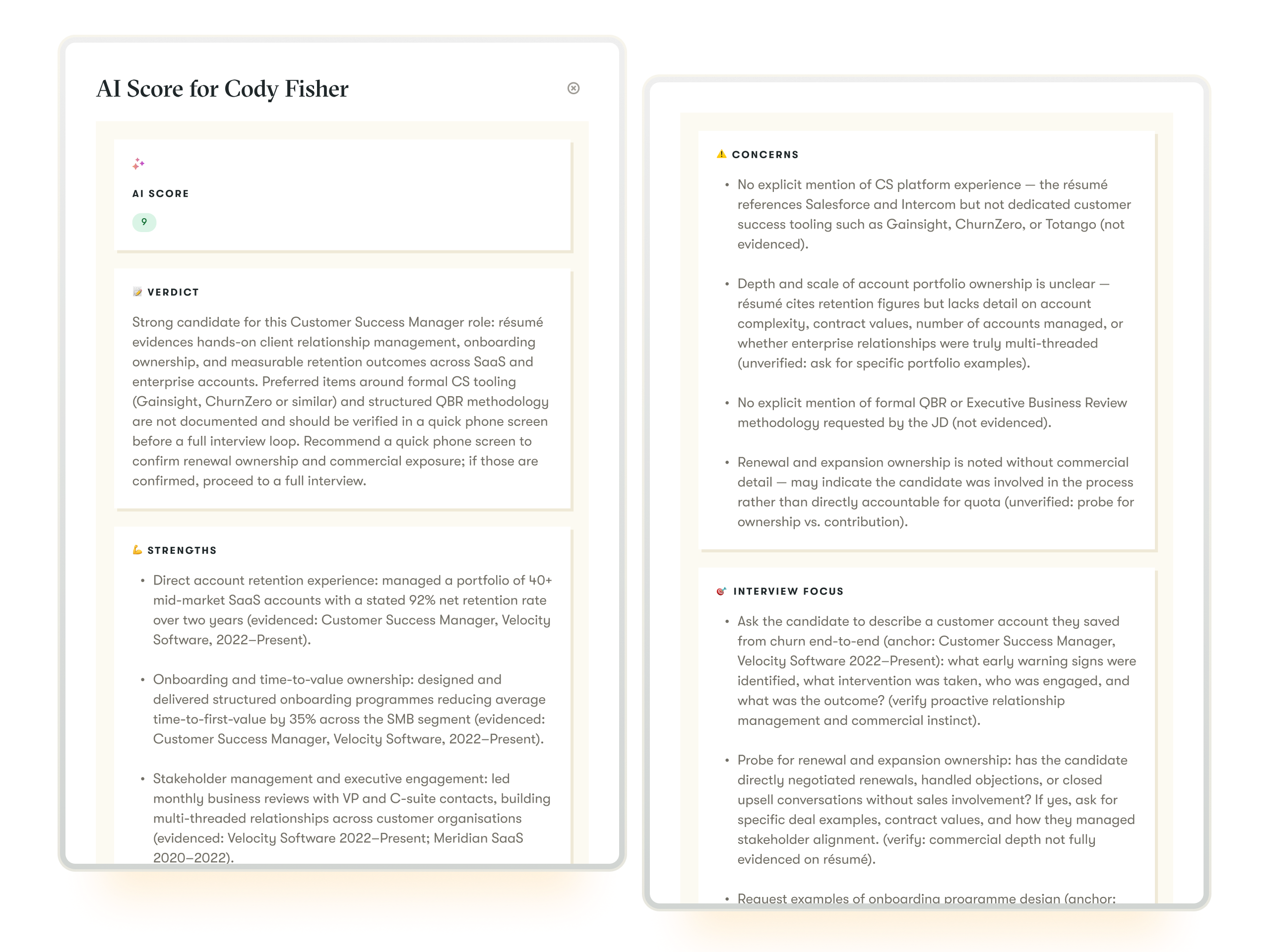
Every score comes with a verdict, a summary of strengths, any concerns, and suggested interview focuses, visible on the candidate profile, in the split view, and in the interview kit.

See exactly why candidates scored the way they did, with full visibility into how each criterion was applied. Your team can understand and trust the outcome without second-guessing it.

Chosen by leading talent acquisition and HR teams
Hospitality

65%  

reduction in time to hire

Streamlined

casting day coordination

Increased

candidate communication

“With these new tools, we’ve set a good foundation to scale our hiring while maintaining our culture and delivering a really great candidate and employee experience.”
Michael Easton
Head of Employee Value Proposition, citizenM
Nonprofit

Strengthened

candidate engagement

Increased

candidate trust

Reduced

reliance on paid ads

“Pinpoint has completely changed how we work. We're more efficient, more consistent, and better equipped to give every candidate a great experience.”
Emma Bishop
Resourcing Manager, Blue Cross
Professional Services

Lower

risk of candidates stalling

Improved

visibility for TA leaders and stakeholders

3,500

employees supported in the states

“I just love that I can manage everything and every role in one place without having to jump between systems.”
Liz Mellor
Head of Talent Acquisition for North America, Davies Group
Retail

Centralized

visibility on all candidates

100+

locations supported

Strengthened

hiring manager adoption

“It’s been really lovely using Pinpoint to align things a bit more. Across the board now, all of our candidates are getting a more similar experience, and the communication they’re getting is much stronger.”
Adam Barnes
UK&I Retailer, Lush

Transparent AI Scoring to surface the strongest candidates first

 Discover how Pinpoint's AI Match Score evaluates every applicant against criteria you set, scores them instantly, and makes sure your strongest candidates are waiting at the top when you're ready to review.
G2
4.8
Capterra
4.8
SSR
4.8

AI Match Score FAQs

AI candidate scoring is the process of using artificial intelligence to evaluate candidates against the requirements of a role and assign a score that helps recruiters prioritise who to review first.

Instead of manually screening applications one by one, recruiters define what matters for the role and AI assesses candidates against those criteria at scale. The goal isn't to make hiring decisions, but to help teams identify stronger matches more quickly and spend less time on manual triage.

AI Match Score takes this a step further by combining a numerical score with qualitative context, including strengths, concerns, and suggested interview focus areas, so recruiters can understand the reasoning behind the result rather than relying on a number alone.

AI Match Score starts by building a role-specific scoring framework based on your job description and hiring priorities.

Recruiters review and refine the criteria, deciding what's essential, what's preferred, and what's simply a bonus. Once scoring is enabled, every applicant is assessed against the same framework and receives a score from 1 to 10.

Alongside the score, recruiters receive a verdict, identified strengths, potential concerns, and recommended interview focus areas. This helps teams quickly understand not only which candidates scored highly, but also why.

The result is a faster and more informed way to surface candidates who are most closely aligned with the role.

Screening large volumes of applications is one of the most time-consuming parts of recruitment. When hundreds of candidates apply for a role, recruiters often spend hours manually reviewing CVs before they can begin meaningful conversations with the strongest applicants.

AI can significantly reduce this workload by evaluating applications automatically and highlighting candidates who appear to be a strong fit for the role.

With AI Match Score, recruiters no longer need to work through applications in the order they arrive. Instead, they can prioritise their review based on candidate fit, helping them identify promising applicants sooner, reduce administrative effort, and move faster throughout the hiring process.

The effectiveness of AI candidate scoring depends on how the system is designed and how much visibility recruiters have into the process.

One of the biggest concerns with AI recruitment tools is the use of black-box scoring models that produce results without explaining how they were reached. This can make it difficult for recruiters to trust the output or understand what influenced a candidate's score.

AI Match Score is designed to be transparent, and Pinpoint's approach to AI ensures all of the AI features in the platform are built to help recruiters and candidates. Recruiters define the scoring criteria, can test and refine them before rollout, and receive supporting context alongside every score. This creates a clearer link between role requirements and candidate evaluation, helping teams make informed decisions with greater confidence.

Traditional keyword matching looks for specific words or phrases within a CV and compares them to a job description. While this can help identify basic alignment, it often lacks context and can overlook strong candidates who describe their experience differently.

AI candidate scoring takes a broader approach. Rather than simply looking for matching keywords, it evaluates candidates against a structured set of role-specific criteria and considers how their experience aligns with the overall requirements of the position.

This helps recruiters move beyond simple keyword searches and gain a more meaningful view of candidate suitability, particularly for complex or specialised roles.

When application volumes are high, recruiters rarely review every candidate under the same conditions. Timing, fatigue, and workload all influence who gets seen first. This can lead to inconsistent outcomes and missed candidates.

AI candidate scoring addresses this by applying the same criteria to every application, regardless of when it’s reviewed. Instead of working through candidates in order of when they applied, teams can immediately identify which applicants meet the key requirements and focus their attention there. This makes early-stage screening more consistent and scalable.

Transparency in Pinpoint’s AI candidate scoring comes from breaking the score into individual criteria and showing the result for each one. Instead of a single number with no context, recruiters see which criteria were met, which were not, and why.

Each criterion includes a plain-language explanation, so the reasoning behind the score is visible and easy to understand. This allows recruiters to validate the results rather than taking them at face value.

Yes. Recruiters define the criteria that the AI uses to score candidates, and they can review and adjust those criteria at any time. This means the scoring model reflects the role, the team, and the context of the hire.

This level of control is important because it keeps the decision-making framework aligned with real hiring needs. Instead of adapting to a fixed model, recruiters shape how candidates are evaluated from the start.

Because every score in Pinpoint includes a breakdown by criterion, it’s possible to explain shortlisting decisions clearly and consistently. Recruiters can show which requirements a candidate met and where they didn’t, using the same criteria that were defined at the start of the process.

This makes it easier to align with hiring managers and to provide defensible reasoning for early-stage decisions. It also reduces ambiguity, since decisions are tied to explicit, agreed-upon criteria rather than informal judgment.

Any scoring system can introduce bias if the criteria themselves are poorly defined. The advantage of a criteria-based approach is that it makes those inputs visible and adjustable.

In Pinpoint, recruiters can review and refine criteria before scoring begins, ensuring they reflect relevant job requirements rather than unintended signals. Combined with features like anonymized screening, this helps create a more structured and fair early-stage process.

Pinpoint focuses on scoring candidates against role-specific criteria rather than ranking them relative to one another. This avoids creating a false sense of precision, where small differences in wording or formatting can disproportionately affect position in a ranked list.

By showing how each candidate performs against the same set of criteria, recruiters get a clearer, more reliable signal for prioritization without relying on arbitrary ordering.

Applying the same criteria to every candidate creates a more consistent basis for comparison. Instead of decisions being influenced by the review order or subjective interpretation, each application is assessed consistently.

This consistency supports fairer outcomes, particularly at the top of the funnel. When combined with transparent scoring and optional anonymized screening, it helps teams focus on relevant experience and qualifications rather than peripheral factors.

Yes. Because every score is tied to explicit criteria and includes a breakdown, it can be reviewed at any point in the process. Recruiters and hiring managers can revisit how a candidate was assessed and confirm that the criteria were applied correctly.

This makes the process more accountable and easier to evaluate over time, especially when reviewing hiring decisions or refining criteria for future roles.

For most hiring teams, the key factors are control, transparency, and integration into existing workflows. The system should allow recruiters to define criteria, understand how scores are calculated, and use those scores directly within their ATS.

Pinpoint’s AI Candidate Match Score is designed around these principles. Criteria are recruiter-defined, results are fully explainable, and scores appear directly in the candidate view, so teams can prioritize and act without switching tools.