Anonymized screening software

Remove bias from early-stage screening

Anonymized screening in Pinpoint removes identifying details during the early review, so candidates are assessed on what matters. It’s built into your workflow, with control over what’s hidden and where it’s applied.

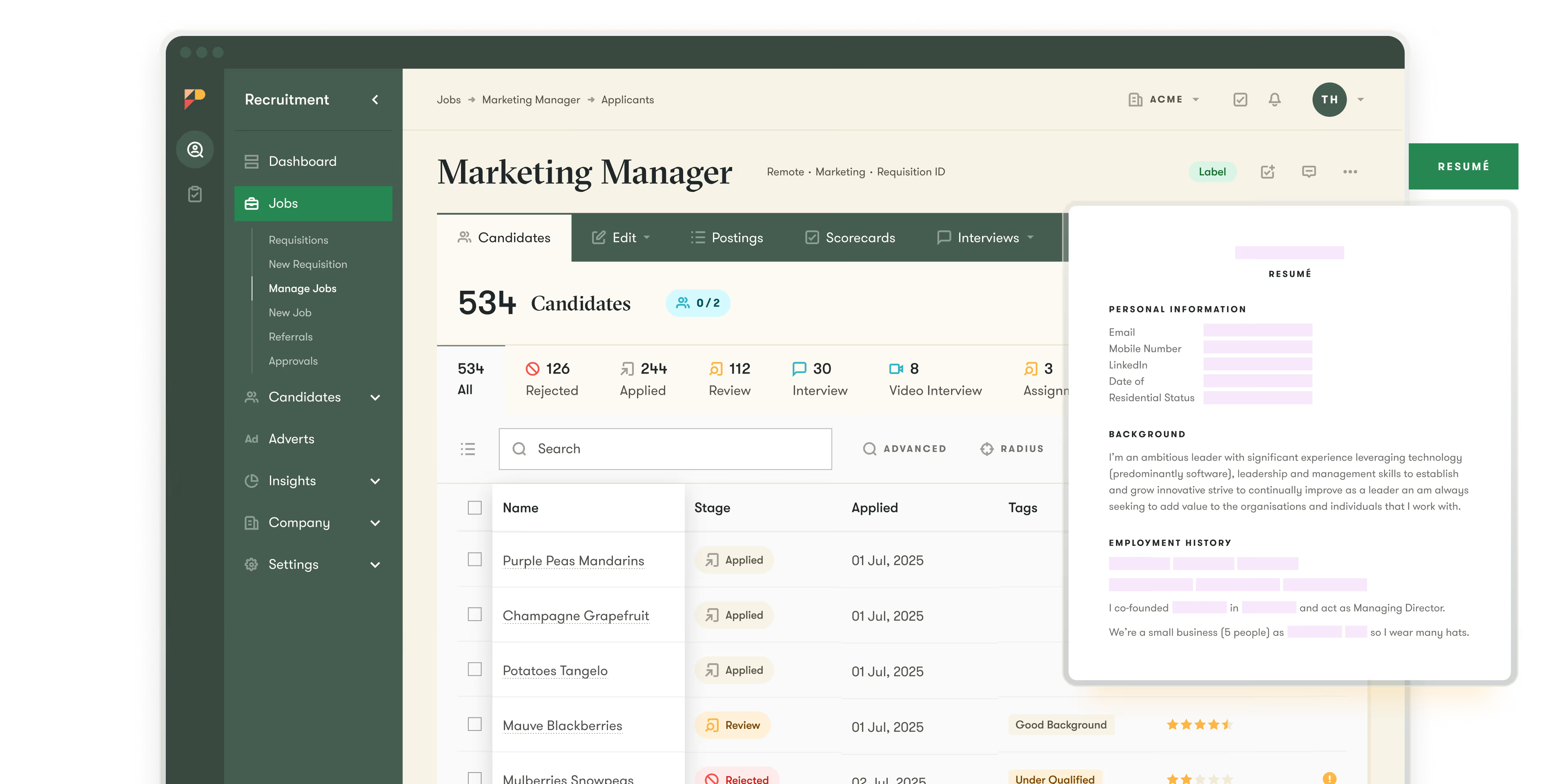
pinpoint ats ui example of anonymized screening to help make hiring easier

Fairer screening, built into your ATS

Find the best candidate for the role
Remove names and other irrelevant details so your team can focus on skills and experience. Candidates are reviewed on the same basis every time, so you know you’ve hired the best person for the job.
Make fairer shortlisting decisions
Remove identifying details that can influence early impressions, so candidates are assessed on relevant experience rather than personal information.
Control how anonymized screening works
Choose what gets hidden and where it’s applied. Set the level of anonymization and roll it out at a pace that works for your team

What does anonymized screening look like in Pinpoint?

AI-powered identity redaction
Configurable redaction levels by role
Redacts names, contact details, location, dates, and gender signals
Consistent pseudonyms across applications
This is soJob-level activationme text inside of a list
Built-in, no separate tool or integration 
Chosen by leading talent acquisition and HR teams
Hospitality

65%  

reduction in time to hire

Streamlined

casting day coordination

Increased

candidate communication

“With these new tools, we’ve set a good foundation to scale our hiring while maintaining our culture and delivering a really great candidate and employee experience.”
Michael Easton
Head of Employee Value Proposition, citizenM
Nonprofit

Strengthened

candidate engagement

Increased

candidate trust

Reduced

reliance on paid ads

“Pinpoint has completely changed how we work. We're more efficient, more consistent, and better equipped to give every candidate a great experience.”
Emma Bishop
Resourcing Manager, Blue Cross
Professional Services

Lower

risk of candidates stalling

Improved

visibility for TA leaders and stakeholders

3,500

employees supported in the states

“I just love that I can manage everything and every role in one place without having to jump between systems.”
Liz Mellor
Head of Talent Acquisition for North America, Davies Group
Retail

Centralized

visibility on all candidates

100+

locations supported

Strengthened

hiring manager adoption

“It’s been really lovely using Pinpoint to align things a bit more. Across the board now, all of our candidates are getting a more similar experience, and the communication they’re getting is much stronger.”
Adam Barnes
UK&I Retailer, Lush

Bring consistency to your screening process

Discover how anonymized screening works inside Pinpoint.
G2
4.8
Capterra
4.8
SSR
4.8

Anonymized screening FAQs

Anonymized screening is the process of removing identifying information from candidate applications during early-stage review, so hiring teams assess candidates based on skills and experience rather than personal details. In an ATS like Pinpoint, you can remove names, contact details, and other signals irrelevant to the role.

The term “blind recruitment” is sometimes used to refer to the same approach, but anonymized screening is more commonly used in modern hiring software. It focuses specifically on the screening stage, where most initial shortlisting decisions are made.

Anonymized screening helps reduce the influence of unconscious bias at the shortlisting stage by removing information that can affect decision-making but is not relevant to job performance.

It does not eliminate bias entirely. Bias can still appear later in the process once candidate identity is revealed. For that reason, anonymized screening works best alongside structured hiring practices like scorecards, consistent evaluation criteria, and structured interviews.

Anonymized screening helps teams focus on what actually predicts success in the role: skills, experience, and qualifications. By removing identifying details early on, candidates are assessed on the same job-relevant information, rather than signals that don’t relate to performance.

For many teams, this leads to stronger shortlists. High-potential candidates are less likely to be overlooked, and decisions are based more clearly on role fit. The result is a better chance of progressing the candidates who are most capable of doing the job, not just those who stand out for the wrong reasons.

Anonymized screening removes identifying information from a candidate’s existing application. The content stays the same, but personal details are hidden during review.

Skills-based hiring changes the input itself, replacing or supplementing CVs with structured assessments or tasks. The two approaches can be used together, anonymized screening for fair early review and skills-based methods for deeper evaluation later in the process.

Anonymized screening focuses on early-stage review and does not carry through the entire hiring process. Once candidates move to interview, their identity is typically revealed ahead of meeting them.

It also cannot remove every possible signal. Some information, like institutions or experience, may still imply background. That’s why anonymized screening is most effective as part of a broader structured hiring approach.

In Pinpoint, anonymized screening is applied at the job level. When enabled, identifying information is automatically removed from candidate profiles before they are reviewed by the hiring team.

Candidates are assigned a consistent pseudonym, so reviewers can track the same candidate across stages without seeing their identity. When a candidate is invited 

Anonymized screening is built directly into Pinpoint. There is no separate tool, integration, or additional workflow required.

It works alongside other hiring features like scorecards, structured interviews, and candidate profiles, so anonymized screening fits naturally into your existing process.

Pinpoint includes anonymized screening as a native feature within the platform. It can be configured per job and used alongside the rest of your hiring workflow without additional tools.

Some ATS platforms rely on third-party integrations or offer redaction options. A built-in approach keeps the process simpler and ensures anonymized screening is applied consistently.